UnChristian


Well, it's birthday week in the Freeland household. The dog celebrates her 3rd birthday today which, if you know my wife, is a big deal. They're at PetSmart picking out a birthday present right now. I'm sure it will have a squeaker. Lucky me.

Kari's birthday is tomorrow, which is just great. Actually, she's pretty easy to shop for, and I've got this new idea for dinner. One of the guys in the singles ministry just reminded me that as long as you sit down, Taco Bueno qualifies as a "sit down" restaurant. Then again, maybe that's why he's still single!

Meanwhile, back in the real world, I just finished a book by David Kinnaman and Gabe Lyons called "UnChristian." Kinnaman is the president of the Barna Group, and must be older than he looks in his picture on the inside flap of the book. Gabe Lyons works for a new venture called Fermi Project after several years as the Vice President of INJOY with John Maxwell. I've listened to Gabe's "Catalyst Podcast" for the past couple of years, and was excited to read their new book.

"UnChristian," in typical Barna fashion, is loaded to the hilt with statistics and survey results with regard to the current perceptions and thoughts of twenty-somethings when it comes to the Church. The results indicate that the vast majority of twenty-somethings, when asked whether or not the Church today reflects the Person of Jesus Christ, answer "no." The surveys span a time frame of around three years of research.

UnChristian attempts to answer why the average twentysomething believes the Church is "UnChristian." Survey says: the Church today is "hypocritical, agenda-oriented, intolerant, sheltered, out-of-touch, and judgmental."

Surprise!

Kinnaman recommends that the Church work to change the perception by responding in a Christlike fashion to criticism rather than dismissing it as heresy, developing honest connections with twenty-something people, employing creativity, serving people, and living a lifestyle of compassion. It's hard to argue with that.

Despite the provocative title, this book is all about statistics and survey results. There is very little in this book that you're going to find controversial, or even ground breaking. Basically, you'll simply find statistics that back up what you've been hearing and reading elsewhere. Nothing wrong with that.

At the end of each chapter, several Christian leaders have written brief snippets of insight on each particular issue. These short vignettes are written by everyone from Margaret Feinberg to Chuck Colson, with a slant more towards younger leaders. These are often interesting, but kill a little of the momentum in the book, and compounded with the sheer volume of statistics make this book extremely difficult to read.

Even so, if you are a person who likes to see hard evidence for opinions, it's a good book to pick up to use as a resource. But I'm not completely convinced that it moves us very much farther down the road of actually making a difference. UnChristian is a good book, with some good statistics. It just feels pretty weak on real-life solutions to me.

It is obvious that we twenty-somethings have a skewed view of the Church. Kinnaman's research shows it, and many other authors have pointed to it. The challenge is, some of the problem is with the Church; some of the problem is with we twenty-somethings.

A good deal of twenty-somethings' dissatisfaction with the church can be blamed on those in the church who are agenda-driven - who use Christianity to make political statements. Need I mention Reverend Al Sharpton, or the "Christian Right" all the politicians are sucking up to today? Some of our dissatisfaction with the church can be blamed on people who are hate-mongers and homophobes in the truest sense of the word. Those wackos in Topeka deserve every single penny of the $10.9M fine for showing up at the funerals of our servicemen and servicewomen with their "God Hates Fags" signs.

But a good deal of twenty-somethings' dissatisfaction with the church can be blamed on the fact that we as twenty-somethings tend to be a selfish, inward-focused, ungrateful bunch. And with that in mind, the real challenge isn't figuring out how to revolutionize our churches so the selfish people can have it their way - that's a pipe dream because we'll just create a new group of dissatisfied people.

Why in the world are we preaching so hard at the majority to squeeze into the mold of a selfish, misguided minority? Aren't we going about this the wrong way? We don't need to revolutionize the Church so much as we need to help twenty-somethings today begin to gain a bigger perspective about what the Church is really about. We need to be platforming the churches who are doctrinally sound, people-loving, externally-focused, multi-generational representatives of God's intention for His Body on earth, rather than continuing to allow the poor representatives to speak more clearly. We need to be inviting twenty-somethings into relationships that already exist, and helping them move beyond selfish idealism to reality and maturity.
In fairness, I think that's the purpose of Fermi Project. I think they're working to head in the right direction. But I'm craving a book that presents a balanced perspective of the issues from both ends of the spectrum rather than either (1) a book bashing the twenty-somethings as young, stupid, and uninformed, or (2) a book bashing the older generations as old, out of touch, and uninformed. There's a middle somewhere in there, and I'd love it if someone would help me figure out how to live there.

Dear Church - Letters from a Disillusioned Generation

Just before I left my office a couple of weeks ago for Italy, our Director of Women's Ministries came running into my office with a book. "You have to read this on your trip," she said, "and tell me if it's really true."

If you haven't heard of Sarah Cunningham yet, my guess is that you will be hearing a lot more about her in the future. She grew up a preacher's kid in what sounds like a pretty typical denominational church like the one many of us who grew up in church called "home." She went to a standard Bible college, and even took a job at a rapidly growing evangelical church, before becoming completely disillusioned with the church.

In Dear Church, Cunningham writes a series of letters to the church on behalf of twenty-somethings everywhere.

As a twenty-something who works with twenty-somethings, you have to know that I was pretty skeptical coming into this book. Ninety-nine times out of a hundred, when someone volunteers to speak on my behalf, I end up wishing they hadn't. It must be the postmodern me who hates being stuffed in or described by someone's box.

But Sarah Cunningham has me and most of my friends pegged. She describes our mindset, worldview, and ultimately our disillusionment with our parents' church with great care and precision. Yet, unlike the vast majority of her peers, she does not prescribe that we heave the local church out with the bathwater.

I get really frustrated with the gagillion teeny-bopper authors I've read who gripe about the fact that the local church doesn't accommodate all ages (like twenty-somethings). It doesn't allow all races, genders, and demographics to respond to God in a way that fits the tendencies of their culture. It doesn't allow for expression of creativity and thought outside the box. And then, those teeny-bopper authors recommend we leave the church in droves and start our own churches (which will create an environment that isn't age, race, gender, or demographically diverse).

Cunningham doesn't recommend that. She doesn't recommend the church walk away from doctrine, or tradition, or any of the things that might get your fundamentalist-leaning underwear in a bunch. But she provides a realistic look at what leaders (and participants) in the local church should expect from the younger adults in the church. If you were to decide to minister in Laos, you would study the culture and learn the language before you ever hoped to serve there. This book will help you do the same thing for a new culture of Christians who are growing up around the corner from your house.

What happens instead, is that churches conduct discussions around conference room tables where middle-aged or older adults discuss "what young people want." Those conversations almost always miss the mark of what young people actually want. We don't want the church to look like the culture. But we also don't want it to be completely detached from reality... in either direction.

Here are a few examples of some of Cunningham's wisdom:
  • "We don't want to feel like we worship on an American Idol set... we are seeking the actual God - the one who created the entire universe from dust - and we don't think that he has to wait on the next MTV fad or Microsoft update to deliver fresh spiritual experiences."
  • Perhaps the greatest reason twentysomethings don't want to be labeled is that we don't want to be known for who we are now. We want to be known for who we are striving to be. For who we are becoming.
  • We value theological questions... [but] we twentysomething Christians can't focus too much energy on analyzing intricate church doctrines because, quite honestly, our peers aren't even close enough to the church to know what the doctrines in question are. Unlike some previous generations, our peers are not delaying their salvation based on unresolved questions about Creationism.
  • Twentysomethings like technology, but we prefer human contact. You know what gets our attention? Put real-life humans in front of us and have them tell us about their real lives.

Pick up this book and read it. Be skeptical of it if you want, but read it. It will take you about 2 hours, but you will be glad you did. And report back to me... I'd love to hear your thoughts.


Across the Spectrum

As a pastor, it's imperative that I keep my mind sharp when it comes to current discussions in theology. But honestly, reading theology sometimes makes my brain hurt. Plus, there are so many writers out there, and so many theological issues, it's difficult to find a concise treatment of theological discussions that aren't skewed towards one side or another. Unfortunately, good Christian thinkers don't always represent their "opponents" in a fair light, so you often have to read three or four books on each side of an issue before you can begin to understand where each side actually stands versus where each side says they and their opponents stand.

Across the Spectrum, by Gregory Boyd and Paul Eddy attempts to tackle some of the most pressing theological issues by presenting both (or several) sides of an issue in the form of short essays by proponents of each side.

This isn't a perfect book, but I found it extremely helpful. I picked up the book a little skeptical. Readers of theology will quickly note that Gregory Boyd is a proponent of Open-view Theism, the view that the future is partly open, and there are certain things about the future that God does not know or control. This is a hotly debated topic (that is covered in this book), and one that I have to admit - I'm extremely skeptical of. So, when I picked up this book knowing that Boyd was one of the major contributors, I expected to see the book slanted in that direction. It wasn't.

This book isn't perfect, but is an extremely helpful primer for current and past theological issues like the inerrancy debate, the sovereignty of God debate, discussion about the age of the earth, the debate about Charismatic gifts, women's role in ministry, and hell/annihilationism, plus several other issues. Each chapter involves a short essay from each vantage point, which contains the most pertinent biblical references, arguments that the writer believes support his position, and responses to common objections concerning each position.

One of the weaknesses of this book is that it only contains a limited number of perspectives on each issue. It certainly isn't exhaustive. Obviously, this is done for the sake of brevity, but there were a few issues dealt with in Across the Spectrum where I felt there were significant arguments not covered. For example, the "Salvation Debate" deals with the extreme Calvinist perspective, and the extreme Arminian perspective, but left out the vast majority of theologians who fall somewhere between those two extremes. Although I certainly understand why the authors limited their discussion to just a few arguments, it was disconcerting at times to see obvious gaps in both views with no arguments for a more moderate perspective.

With that said, I think this book has three primary strengths.

First, I was extremely impressed with the fairness given to each perspective. This book is completely void of any personal attacks, sarcastic or snide remarks, or demeaning language towards other theological perspectives. Although the disagreements are vast and tremendously important, I felt as though they were tackled in a fair and humble way. It was refreshing to read some of the perspectives with which I agree without being embarrassed at the way "my side" represented itself. Even in cases where I'm relatively certain the book's primary authors do not share a perspective toward which I lean, (i.e. Dispensationalism), I felt each subject was treated fairly and accurately.

Secondly, none of the articles or sections were signed. That is, you don't know who wrote the articles for which position. I love this, especially for younger and less-experienced theology students. This keeps the immature reader from automatically dismissing arguments because of the person who supports them. When I was just beginning to grow as a Christian, some of the people who mentored me quickly taught me who "we" agreed with, and who "we" didn't agree with. That set me back - just because I might not like someones perspective on End Time events doesn't mean they have nothing worthwhile to contribute to a conversation about women's roles in ministry. This book forces the reader to deal with the arguments rather than the people who give the arguments. That is an extremely helpful component to this book.

Finally, the book presents a short case study at the beginning of each chapter that gives an example of how each issue presents itself in twenty-first century theology. For a person who is driven to ask the question "how will I ever use this in real life," the case study is immensely helpful. Sometimes the case studies are a bit cheesy, but for the most part they help set the stage for the discussion to follow as a discussion about issues that affect people - people that God created, loves, and desires to know Him. Sometimes in our vigorous debates about theological issues we can get more focused on being right that we end up being wrong, even when we're right. The case studies tend to help guard against that tendency.

Overall, this book is worth reading. It's certainly lacking in a few areas, but is more helpful than not.

Italy Report

To steal a line from Dickens, "it was the best of times, it was the worst of times..." We made it in late Tuesday afternoon after 6 days, mainly in Florence and Bologna. I mentioned in my last post that we took a group of 4 leaders from our young singles ministry as a hands-on leadership development opportunity. They're going to be taking a larger group of Young Singles in June, so we spent most of our time meeting with our ministry partners on the ground, learning a little about the culture, and trying to get some good traction for how a larger team might be most effective.

The opportunity to serve our mission partners in Italy were "the best of times." We spent the first two days in Florence, with a team from Agape Italia (Campus Crusade for Christ's branch in Italy). They were so gracious to show us around Florence, and to take us to one of the campus buildings to dialogue with some of the Italian students there about their perception of Americans, Italy, and the state of the church in Italy. Put mildly, this was eye opening. In the eyes of Italian students the Roman Catholic Church has so abused its power over the past few decades that the words "Christian," or "Christ" are synonymous with "corruption" and "control." They don't want anything to do with Jesus as a result of how poorly He has been represented, especially over the past several years.

On almost every corner in Florence there are gorgeous, elaborate, intricately beautiful monuments to a God in Whom virtually nobody in Italy believes.

After a very successful time in Florence, we trained to Bologna, where Jesse and Tricia Marcos have just landed on the ground to serve with Agape Italia at the Western world's oldest university, which is attended by 100,000 students. The largest two campus groups are the Wiccans and the GLBA. On a campus of 100,000 students, there are zero evangelical Christian organizations. As far as Jesse and Tricia know, there are no evangelical Christians attending university in Bologna. As you walk through the streets of Bologna, the darkness of the culture is almost palpable.

I told you we took this trip as a leadership development opportunity so some of our leaders could get some on-the-job-training, and learn some lessons about mission work in Italy before taking a larger group over there.

Thank God we did.

My plan was for us to learn lessons the easy way - by talking with missionaries on the ground, observing students in their environment, and decoding the culture by observing it for ourselves.

Unfortunately, we learned most of our lessons the hard way. Italy is a tremendously difficult place to travel. It took us six days to feel like we had a good feel for the train system in Italy. Nothing is marked well, or organized. Trying to board a train in Italy with all our luggage was like trying to herd ten thousand cats into a 4 foot by 4 foot room. And the train only stops in the station for 2 or 3 minutes.

We planned to spend the afternoon in Cinque Terra (Rick Steve's favorite spot in the world), where we had been assured there would be a place to check our luggage while we did the hike from village to village. There wasn't.

So, I spent the day sitting by the Mediterranean on a park bench guarding our luggage while the rest of our team walked part of the trail. They stopped after only about 1 kilometer because there was a toll for the trail nobody had bothered to mention, and they didn't want to spend 10 dollars a piece the way the day was going. They should have - the pictures of Cinque Terra are beautiful, and I'd like to go again someday now that we know what we know.

That evening, we hopped on a train for Milan (we were told it was most convenient to fly out of Milan), got to the train station and hopped on a bus for the airport (fifty miles away from the city) and then caught a cab to get to the hotel. The cabbies there have a racket going because there's no way to get to your hotel but by cab, so they were attempting to charge anywhere from 40 dollars to 70 dollars for the one mile ride to the hotel. We finally got a guy to take us for 30 dollars. By the time we finally got everything navigated, and arrived at our hotel, it was midnight, and we had 3 hours to sleep before we needed to get up for our flight the next morning.

The best of times, and the worst of times.

I'll write more about our missions philosophy in the future, and the benefit of my stay in Cinque Terra was the opportunity to read three books I'm looking forward to reviewing. One of them was incredible. I'll get back to that once we get back in the swing of things. For now, I'm just glad to be home.

Italia here we come!

We're right smack in the middle of a really exciting season of ministry. (Which, translated means, "We're running like chickens with our heads cut off").

Wednesday we're leaving for Italy with a small group of singles. We'll only be there for 6 days, and are splitting time between Florence, Bologna, and Cinque Terra. The plan for the trip is to scout out a project for a large group of singles to take on in June '08. Basically, it's a leadership development opportunity. Kari and I are taking 4 of our leaders to get a lay of the land and to meet with and observe our ministry partners on the ground. Then, they'll lead the trip in June and I won't go. There's nothing like letting people know you're about to throw them to the wolves to make leaders learn, grow, and stretch themselves with intentionality. I'm excited about the trip, mostly because I think it's a great opportunity to see some of our key leaders continue to develop.

I mentioned our ministry partners on the ground in Italy. McKinney Church supports missions about as well as any church I've ever been a part of. In addition to giving a massive amount of money to local and global missions every year, we encourage our members to view our relationships with missionaries as a partnership.

Every church I've been a part of in the past has supported missionaries, but I couldn't name three of them - much less tell you anything about where or how they're serving. A couple of times the missionary was invited to give a slideshow when they were home on furlough, but that was about the extent of our involvement.

At McKinney Church, each Adult Bible Fellowship/Small Group is asked to "partner" with a global missionary that McKinney supports. This includes financial support, but also an investment of the class in the mission the missionary is doing. That is accomplished through short-term trips (and long-term trips in a few cases), as well as regular communication and prayer. It gives the entire church a global feel, which is really cool.

It's tough to be inward focused when so much of your ministry is focused on people making a difference throughout the world.

While we're in Italy, we'll be working with Greg and Charmaine Lillestrand, who are in charge of Campus Crusade for Christ's ministry to Italy and Western Europe. We'll also be visiting with Jesse and Tricia Marcos, who are working with Greg to begin a campus ministry in Bologna at one of the oldest universities in the world.

The plane ride will allow me to get ahead on my Monday book reviews. I'm about to finish an interesting theology book I'm looking forward to reviewing, as well as a brand new book that hasn't gone to print yet, and a marketing book with a cool cover. See you when we get back!

Ciao!

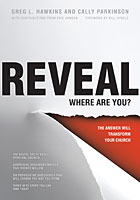
Reveal

About ten years ago when the things going on at Willow Creek Community Church were a hot topic for conversation, and the "seeker sensitive" movement was gaining momentum, I had a conversation with one of the guys in my church where he said, "Chris, these guys are doing some really amazing things and some things that they're going to regret. Unfortunately, we won't know which is which for ten or fifteen years."

Those were wise words.

And here we are, ten years later, and the verdict is in. Well, at least in part.

Greg Hawkins has been the Executive Pastor at Willow Creek for the past eleven years, and Cally Parkinson was the director of communications at Willow Creek prior to taking her new role in the brand management wing of the Willow Creek Association. And their new book "Reveal, where are you?" is a look behind the scenes at several conversations going on at Willow Creek as they have begun an intentional look at how things are really going at Willow Creek.

Although you may not agree with the "seeker sensitive" strategy, or many of the things Bill Hybels has championed over the past several years, it is virtually impossible to not respect the guy. On multiple occasions, I've heard Hybels stand up on platforms and admit, "we never saw that coming," or "we could have done that better" about various things Willow Creek has done (or not done). Though I've never met him personally, I deeply respect the humility it takes to allow a book to be written by one of your staff members that highlights the warts, blemishes, and misses of your leadership team.

If nothing else, this book is the most visually appealing book I've ever read. The graphics, charts, and color-coded chapters make this book read like a picture book, although the information contained within its pages are far from elementary.

At its core, this book seeks to help other churches gain the right tools for measuring actual growth of its members rather than simply measuring growth of attendance. It aims to help churches think in terms of measuring those things that are less tangible and more difficult to observe about a church's success, like life change. The book tracks the evaluation process of Willow Creek Church as they looked at how successful they were at being a part of helping Christians grow at several different points along the Christian growth continuum.

To make a long story short, it seems Willow was doing a great job with brand new believers, and growing believers, but a lousy job with mature believers. And to make things worse, the mature believers were the ones who were most apt to help reach the seekers the church sought to reach. Come to find out, it isn't new believers who do the best job evangelizing seekers - it's Christ-Centered mature believers who do the best job evangelizing seekers. What's worse, they found that the mature and maturing believer was extremely dissatisfied with the local church because they had never learned to do ministry - rather they were noticing that the church didn't have anything to offer them. Rather than commissioning the mature believers into the world, Willow was trying to keep them in the church, and was losing the battle.

Though Hawkins and Parkinson don't verbalize it this way, I think the issue boils down to this: For the last 10 or 15 years, Bill Hybels has said that the local church is the hope of the world. Now they're beginning to realize that it isn't. Jesus is the hope of the world, and Christians are supposed to reflect His light to the rest of the world. The church's responsibility is to figure out how best to train, equip, and mobilize believers to grow out of the local church so that (as maturing children) they are less and less dependent on the church meeting their needs, and more apt to be used in meeting the needs of others.

This is a short, relatively easy read, and is worth perusing for anyone who is curious about the state of the seeker-sensitive church in the twenty-first century. It contains some great insight, neat ideas, and will stretch you to think about where you are on the spiritual growth continuum. Like the seeker-sensitive movement ten years ago, you may not agree with everything these authors recommend, but you will definitely be challenged by their thinking to come up with something that helps your church (and you as an individual) become all it is intended to be.

Why I Mow The Yard on Sundays

I switched blog philosophies several weeks ago to doing a book review on Mondays. I just got to the point that I was struggling to find anything worth saying publicly on a regular basis, and the Monday book review was a good challenge for me to read a new book every week and interract with it on a regular basis. I figure I'll leave the wisdom and insight into ministry to some of the other guys out there who excel at that type of thing, and try to do something a little different.

But this is an unbelievably busy season in ministry for me, and I didn't quite finish my book last week. So, you're going to get the old kind of post today. Sorry.

We knew it was going to be a crazy season in ministry. We just launched a new singles philosophy at the church that is pretty high-maintenance at the outset, I'm preaching in a couple of weeks, leading a premarital counseling class, doing a couple of weddings, preparing for and traveling to Italy for a week in the middle of October to do some mission work there, and trying to keep-up with some of the relationships I've been building since I came back in June.

I'm no sage, but I know that times like this happen in ministry (and life in general, for that matter). Fortunately, we saw this one coming far enough in advance that we've been able to protect our November to give us a season of rest after the season of busyness. But even so, my personal bent is such that I tend to get extremely discouraged during my busiest times of ministry.

Most of the time, you don't see a lot of fast progress in ministry. So a lot of times when I'm working my tail off, it is for few noticeable results. Very rarely does God use me to be involved in changing a person's life overnight. Results are slow, people are messy, and a lot of times the ministry is a bit more like herding cats than shepherding sheep. And so in my busiest seasons of ministry, it's easy to get completely discouraged because you're exerting so much effort and see very little change.

Sundays are the worst. You prepare, pray, and preach on a Sunday morning, and by the time the Cowboys kick-off, the average church member has forgotten 95 percent of what you said. And the five percent they remember is the story about the crocodile you told to open the message. And so, some of the most discouraging times for many pastors (not just me) is Sunday afternoon.

So, I mow my yard every Sunday afternoon.

My grass is a great metaphor of ministry for me. I work hard in the yard. I prepare the soil, I fertilize regularly, I water every day, pull every weed I can see, and pulverize every critter that might threaten the health of my yard. But if I was to lay down on my stomach and lament the fact that I can't see the grass growing, you would call for the men in their nice white coats to cart me away to the funny farm.

So, I spend an hour or two every Sunday after church (sorry Sabatarians) cutting my grass. It's the only thing I do every week where I get to see an instant reward for my work, and a constant reminder that ministry (and life) is worth the hard work.

You've got questions? We've got answers.

I thought this was funny, following up to my link to teampyro's Pomotivators. HT: Faithmaps


I'm Glad You Asked

I've mentioned "I'm Glad You Asked" before in passing, but just pulled it off my shelf again and read back through it, and thought it was worth a stand-alone review.

Several years ago I took a class with "the Prof," Howard Hendricks, at Dallas Seminary. Prof pulled out this book, and declared to the class, "Men, if I ever get the honor of speaking in your churches, I'm going to walk in your office and look on your bookshelf to see if you have this book. If you don't, you can forget about me teaching in your church - I'll know you're not serious about reaching those around you."

Prof always has been one given to hyperbole now and again. But hyperbole aside, this really is a book you need to have on your shelf.

Ken Boa and Larry Moody have invested almost their entire lives with unbelievers, attempting to talk with them about some of the most difficult questions about Christianity. Throughout their decades of dialoguing with unbelievers, Boa and Moody believe there are only actually twelve questions that unbelievers say are keeping them from trusting Christ. This book is devoted to answering those twelve questions.

"Is there really a God?" "Do miracles really happen?" "Isn't Christianity just a psychological crutch?" "Why do the innocent suffer?" "Is Christ the only way to God?" are among some of the questions this book attempts to answer.

Boa and Moody rely on logic, common sense, and science for many of their arguments, and attempt to teach you how to confidently enter discussions with unbelievers without fear. For the most part, the authors do a tremendous job at simplifying complex arguments to the point that even I can understand them. The major exception, unfortunately, is the first question the authors attempt to answer: "Is there really a God." Although some of the arguments used to answer this question are simple, several of them discuss metaphysics and thermodynamics, and shoot right over the head of the average reader. Those of us who are slightly below the average reader don't have a prayer. Obviously, the arguments are important to the point the authors are making, but could cause you to be overwhelmed somewhere around page 29. Just skip to page 32 - after this chapter, the book is pretty easy sledding.

This book will be particularly helpful for those of you left-brained people who need a logical, rational, analytical look at the arguments that defend Christianity. Each chapter even contains a flow-chart that traces the path of logic through the chapter.

You may not agree with every argument the authors present. Some of them betray particular theological positions that the authors hold which you may not be comfortable with. That's okay, I've never read a book in which I couldn't find something to disagree with. The vast majority of this book is solid, logical, and will help you put a grid over the way you think about the evidence for the validity of Christianity.

If you've ever had that paralyzing feeling of anxiety about sharing your faith - afraid someone was going to ask you a question about the evidence for Christianity that you might not know the answer to, buy this book. If nothing else, buy it because you never know when Prof is going to show up in your office.

Holy Discontent

I was really excited to pick this book up. I've respected Bill Hybels for a long time. Throughout the late nineties and early part of this century, Bill Hybels and the philosophy of Willow Creek Community Church were the "hot button" issue that students of theology debated over coffee. Regardless of where you fall/fell on that debate, I think it would be impossible to not respect Hybels for his humility in dealing with his critics, and willingness to admit when he has made mistakes.

I've read several of Hybels' books, and have generally been very impressed. Courageous Leadership and Just Walk Across The Room were both good reads with some excellent material.

Although I thought Holy Discontent was "okay," I don't think it's probably Hybels' best work. And that's a shame, because in a lot of ways, it's a book about what made Bill Hybels, Bill Hybels.

Hybels talks about "Holy Discontent" in the way that most people talk about "Driving Passion." But, it's not just a passion that comes and goes, it's a passion that defines your life. The biblical illustration Hybels uses is Moses who seems to have had a "holy discontent" about the status of the nation of Israel that drove him to both murder and liberation.

For the most part, and I mean this with all due respect, Holy Discontent is something of a "rah-rah" book. Hybels challenges us all to find the one thing that drives us - the one thing that we, like Popeye "just can't stands no more," and devote our life to that thing.

Although Moses is a good example of someone who does seem to have had a "holy discontent" about something, I wasn't ever completely convinced by this book that every person is given a "personal burning bush." The anecdotes and examples in the book were "change-the-world" kind of examples. One guy drops everything to move his family to Australia and pastor a church. Another woman leaves a lucrative accounting career to move to Africa and work with AIDS orphans.

Don't misunderstand me - I'm infinitely thankful for those kinds of people, and have no doubt that their desire and decision to make those kinds of sacrifices are God-ordained. But what about the guy who lives a quiet life on his block and quietly impacts his neighborhood with the gospel? We certainly need people who are changing the world on a macro level, but I'm not sure I think everyone is called to have those kinds of dreams. You have to have Pauls and Timothys, but you also have to have Freds and Jim Bobs.

The second big challenge I had was that all of the illustrations of Holy Discontent being put to use in the book were with local church ministry. Again, we desperately need people with a heartbeat for the local church. I'm one of those people. But we also need people with a heartbeat for their neighborhoods, para church ministries, and families. As one of my mentors says constantly, "The local church is not the hope of the world, Jesus is."

The final big challenge for me in this book was that it doesn't help me identify my area of holy discontent if I have one. It tells me how to live once I've identified my burning passion. It tells me what holy discontent looks like. And it tells me a lot about other people who are changing the world. But if I have an area of holy discontent and don't know what it is, I'm not sure what steps to take in identifying it after reading the book.

Holy Discontent is an easy, quick read, with some great stories that will get you fired up about the potential for the church to do great things in the future. However, if you're looking for a book that will help you identify what you were created to do based on biblical principles, I'm not sure this one is the best fit.

Random Gratuitous Celebration Post

I'm planning to take Monday off, so I'm not sure if I'll get a review from my latest read posted then or not. Meanwhile, today's a big day to celebrate two things:

Tonight marks the kickoff of the 17 greatest weeks of the year. College football season officially begins tonight, and it's a really good thing. Okie State kicks off their season on Saturday with a mammoth road game between the hedges. Not sure whose brilliant idea that was, but if we lose I hope they get fired! Either way, there's nothing better than college football. If you need me on a Saturday for the next 17 weeks, I'll be on the couch.

On a more serious note, I did something last night that two years ago I wasn't sure I would ever do again. Back in February I wrote a post talking about my battle with Ramsay Hunt Syndrome, a syndrome that attacked the 7th cranial nerve and paralyzed the right side of my face. It affected my hearing, my eyesight, and left me looking like a person made of plastic placed too close to the furnace.

As an athletic-type-person, one of my favorite outlets is playing softball. During college and seminary, I was a fairly decent left center fielder. I wasn't lightning fast, but I didn't miss a lot of balls. Ramsay Hunt changed that, because the muscles in my right eye were paralyzed and didn't allow me to follow the ball when I ran. I tried playing once after RHS, but there's something about a rock-hard ball coming at your face combined with a jiggly eye that made the excitement a little too stressful for me.

Eye muscle is one of the things I haven't regained since RHS - perhaps because they don't make dumbbells for that. So, I figured softball days were over. That was, until one of the single guys invited me to sub for his men's team this week. I told him my issue, and he stuck me in the infield where my jiggly eye would only have to react, not bounce. And it worked. I had a blast, played decent, and I'm back in the game baby!

I've regained about 90 percent of the movement in my face since RHS. The doctors say I won't get any more back (But then again, they said I wouldn't get any back in the first place... what do they know?). Even so, I'm cool with that. Though you might not be able to tell anything was ever wrong with me, I can still tell every time I look in the mirror. And it's a constant reminder that God's purposes are bigger than our momentary light afflictions. Every time I look in the mirror, I remember that God is faithful to even me. Jiggly eye and all.

The Big Idea - Dave Ferguson

I picked up The Big Idea because it was on a list of recommended books put out by Leadership Network, some guys I have worked with in the past and respect quite a bit. It was written by Dave Ferguson, Lead Pastor at Community Christian Church (CCC) - a multi-site church headquartered in Chicago, Illinois.

The book discusses a philosophy of doing Sunday morning church in such a way that the entire Sunday morning "experience" focuses on one primary theme - the "Big Idea." The rationale from the big idea comes from a core value that "[the church] can no longer afford to waste another Sunday allowing people to leave confused abotu what to do next." As a solution, CCC leaders have elected to frame their entire Sunday morning program for children, youth, and adults about one "Big Idea." The hope is that a laser focus on one big idea will better position the congregation to understand and act on Truth, rather than leaving the service overwhelmed by too many messages in too many environments.

The first half of this book describes a part of the rationale behind the philosophy. The assumption by Ferguson (and his team) is that the average Christian is bombarded with a different message in small group, Sunday school, the main church service, and other weekly Bible studies and church services. CCC's contention is that the mixture of messages leads to confusion and or helplessness when it comes to applying Truth to the believer's life. The solution of the "Big Idea" allows for a unification of teaching, better checks on the types of curriculum the church member is handed, and the ability for children, youth, and adults to have common ground to discuss and apply when leaving the church. It also fosters unity of purpose on the staff and volunteer teams.

The second half of the book describes the process CCC goes through to develop and implement the "big idea" - a series of meetings beginning a year out, which gives the staff and volunteer teams ownership in the "big ideas" for the coming year. It also gives everyone on the team time to exercise creativity and produce quality resources to aide the communication of the "big idea." The concept for each "big idea" comes a year out. Then, the idea is honed down in meetings thirteen weeks out, nine weeks out, five weeks out, three weeks out, two weeks out, and one week out.

I really appreciated two major things in this book. First, Ferguson repeatedly warns against merely adopting CCC's philosophy without taking into consideration your own church's culture and DNA. This was a refreshing change from many church philosophy books that give the distinct impression that their philosophy will work in every culture, even when it won't. The Big Idea does a great job at pointing out several potential pitfalls to consider before even applying a small part of the book to your church.

Secondly, the chapter (3.8) on the relationship between the Senior Pastor and the Worship pastor is worth the price of the book. Having served as a worship pastor, and currently preparing to serve as a senior pastor at some point, I may have a heightened sensitivity to this relationship - but these guys nailed it. Senior Pastors and Worship Leaders often have perspectives that mix about as easily as oil and water. Yet, their relationship is one of the most strategic in the church. This book does a good job at pointing out how the two can better understand each other.

I have one primary concern with The Big Idea, and it's a biggie to me. The entire system depends on developing the "big idea" first. As a result, the process as presented in the book requires an overhaul for churches that value a more expository style. But worse (in my opinion), is the fact that the system presented in The Big Idea begins with application rather than beginning with the Text. As the process is layed out in The Big Idea, the creative team figures out what they believe should be the "takeaway" from each Sunday morning, and then goes off in search of "stories, Scriptures, illustrations, insighs, props, and jokes..."

This kind of approach (as the norm) makes me pretty nervous. When you begin with the desired application, you open yourself up to the danger of finding passages that weren't written to say what we make them say. As a result, the Bible can be relegated to a mere illustration of our point rather than the "Big Idea" being the summation of the Bible's point.

I'm not making a statement about whether or not topical preaching is okay. I'm not saying this particular method can't (or isn't) being done well by the good people at CCC and across the planet. I'm simply saying that I get really nervous when we begin with our desired outcome, and overlay Scripture, jokes, and illustrations to make our point.

Don't be discouraged from reading this book. It has some good ideas - more than I can write in a blog entry. But read the process with an eye for how it might be tweaked to begin with the Scripture and end with "the big idea."

Pornified Update

Interesting that since my last post included the words "porn," and "pornography," my web hits per day have more than doubled according to www.statcounter.com.

Doing a key word analysis was both flattering and sickening. Ten sick perverts out there did a google search for "Chris Freeland Porn."

They're probably from Canada.

Pornified

I only threw up twice, but I was nauseous for almost the full 276 pages of this book. This book was twisted, repulsive, disgusting, and if you're in ministry or work around anyone younger than 40 on a regular basis, it needs to be the next book you read.

Pamela Paul is a writer for Time magazine and a freelance writer for many other magazines, and has done the most exhaustive study I've read on the consequences and costs of pornography in (and on) our society.

Pornified includes excerpts from interviews with more than a hundred people from mainstream society, and reveals that the average consumer of porn in today's society isn't the dirty old man down the street; it's the clean-cut middle-class guy (and girl) next door. Porn is no longer the "dirty little secret" between a man and the gas station attendant - it's accepted by a good portion of mainstream society as a perfectly normal thing.

Ms. Paul spends roughly the first half of the book with what amounts to a shock-and-awe description of the kinds of pornography that are available, the history of porn in modern society, and the different perspectives from which men and women view pornography.

Little disclaimer: I'm not a prude. I grew up in public school, and have worked in college, youth, and young adult ministry for around ten years. But this stuff blew my mind. When you hear people talk about "porn" today, they're not talking about an airbrushed supermodel in a relatively tame pose on the pages of Playboy. That's the porn of the pre-internet age where there was still a 'check' on pornography consumption - you had to go out in public to purchase something to satisfy your craving. Today's porn is free, private, and makes Hugh Hefner look like Mister Rogers.

Pornified pictures a world where porn functions just like a drug. You start with something relatively tame and use it until you need something stronger. Then you go off in search of something else stronger. Before long it can take over your life.

The most terrifying part of this book to me was the section that describes the effect of pornography on kids. It points out that many of our kids are being educated about sex and intimacy through the websites that are only two clicks away. Although it's too soon to measure the long term effects, studies already show a skewed ideology in kids' thinking about how human sexuality functions. The long-term effects on marriages and relationships are difficult to imagine.

Again, this book will make you sick to your stomach. It contains language and graphic descriptions that will make you blush, gasp, and vomit at the same time. But you need to read it. I have guys in my office every month who are struggling in this area. I hear of guys almost daily who have fallen in this area. And the problem isn't going to get better through our remaining ignorant.

Buy this book. Buy some Pepto Bismol. Someone you talk to in the future will be glad you did.

Caught Being Good

Many moons ago, the elementary school I attended did something called "caught being good." The idea was simple: Teachers carried around little slips of paper that had "_________ was caught being good" written on the front. They were always on the lookout for kids who were doing the right thing without a knowledge that anyone was watching. When they "caught" you doing something good, they would pull one of those slips out of the paper, write your name on it, and you got to take it to the principal for a "high five."

That was it.

You got a piece of paper, walked to the principal's office, he gave you a high five, and you walked back to class.

The purpose is obvious: good behavior is positively reinforced and rewarded. As a result, students were encouraged that people were watching you do the little things right even when you didn't think they were.

The "prize" wasn't tangible. It cost however much 1/8th of a piece of computer paper costs. We didn't receive a free pizza party, or a sticker, or anything. We got a piece of paper and a high five, but I guarantee you I could find some of those pieces of paper to this day.

In your organization/home/business/church, how frequently do you take the time to celebrate people who are "caught being good?" When you catch people doing the things your organization values behind the scenes, make sure to let them know you notice. Make sure you tell them exactly what you noticed and why it's important. And don't forget to give them a high five. If they're anything like me, they'll remember it forever.

Same Kind of Different as Me

This week, my Monday book review is being posted on Tuesday. Things are a little bit crazy around here. One of these days, I have a cache of other posts I'd like to make about various things, but the tyranny of the urgent keeps knocking down those plans.

I just finished reading "Same Kind of Different As Me," by Ron Hall and Denver Moore.

Let me say first, I rarely read fiction. I can count on one finger how many fiction books I've read in the last couple of years. Part of that was the necessity of reading non-fiction books for graduate school. Part is due to the fact that I've never been one to believe the book is better than the movie. I'd rather get some popcorn, rent the DVD, and finish the story in two hours than invest several days in a story that I don't know beforehand that I'm going to like. And, I figure if the book is even mediocre, it will ultimately become a movie anyway, so I might as well save myself the trouble.

But, nearly everyone in our church is reading this book right now because parts of it took place within the walls of our church. So, I decided to pick it up.

If you're a fiction kind of person, this book is definitely worth reading. It's based on true events, but is written like a work of fiction. The subtitle is "a modern-day slave, an international art dealer, and the unlikely woman who bound them together."

First of all, being an ignorant person from suburban and metropolitan America, I'm ashamed to admit I didn't realize that slavery-like conditions still exist in some part of the United States. This book tells the story of a man who grew up in 20th century Louisiana, on a cotton plantation, living the kind of life most of America left behind in the 1860s. After fleeing the cotton plantation, he ended up on the streets of Fort Worth, TX where he was pursued by a wealthy art dealer who initially wanted nothing to do with him.
If you're a conservative theology buff, you might read some things here and there in the book that make you wince - especially as it relates to superstitious things like ghosts and "visitations," and direct communication from God through dreams and visions. That's material for a different conversation, but shouldn't distract you from reading this book.
The story of these men; a modern-day slave, and a wealthy upper-class international art dealer, and the "unlikely woman who bound them together" is a good story that illustrates what can happen when Christian people do Christian things. Good Works produce Good Will, which provides a Good Platform for the Good News. This is the story of that.
I can't wait for the movie....

Contrarian's Guide to Knowing God

It's been a crazy week. Some guys take hiatus(es?) from their blogs. Recently I've been having to take hiatus(i?) to blog. One of these days I'll get a bit more consistent, but today is not that day.

I just finished a new book: A Contrarian's Guide to Knowing God, by Larry Osborne.

I have to admit, I was prepared to dislike this book. The flyleaf promises the book is for those who "Don't fit the mold..." are "tired of adjusting to other people's definitions of spirituality..." who feel "traditional spiritual disciplines just aren't working for [them]..." To me, it seemed like it was going to be one of those throw-everything-out-the-window kind of books for anti-establishment people who are discontent with everything the church has stood for over the past several centuries and want a complete rework of everything. Those people wear me out.

This book wasn't like that at all. Obviously, there were things in it that didn't do a lot for me, but overall I really enjoyed it. Here were some of my take-aways.

  • We do people a disservice when we offer them one-size-fits-all approaches to discipleship.

  • It's unrealistic to expect everyone to become a Timothy or Titus. Timothy and Titus were not the standard fruit of Paul's ministry. They were exceptional. That's the point.

  • Over time it was the "cobblers" left behind in Corinth who turned the ancient world upside down, just as much as the missionaries bouncing from town to town.

  • Most of our programs for discipleship are linear, but few of our own journeys followed the linear path we prescribe.

  • Most growth happens on a need-to-know basis.

  • Bible theology and knowledge are important, but they don't equal pleasing God.

  • There's a distinct difference between a blind spot and high-handed sin in another person's life.

  • God hasn't called us to be world class at everything. You can't have the grace of a ballerina and the body of a sumo wrestler.

  • Work to be a better you, not a poor copy of someone else.

  • Many of us have a concept of a balanced life that is more a reflection of American values than biblical principles.

  • Instead of asking, "how are things going," ask "Am I doing the right things?" In the end, that's all you have control over.

  • An amazing number of people swear by things that ought to work but have never really worked for them.

  • The recipe for maximized potential is strangely similar to the recipe for a nervous breakdown or broken home.

Crafty Vision

Just got back from South Carolina. The most eligible bachelor in my immediate family (okay, he was the only eligible bachelor left in my immediate family) is now officially "off the market." The wedding went well, and the couple is honeymooning on the beach right now. I love weddings. More on that some other time...

For now, I was just reading in Genesis 11, doing some preparation for a series I'll be teaching this October, and noticed something interesting. You remember the Tower of Babel story, which comes sometime after Noah's ark landed. In Genesis 11:4, the people of the earth say, "Come, let us build for ourselves a city, and a tower whose top will reach into heaven, and let us make for ourselves a name, otherwise we will be scattered abroad over the face of the whole earth."

The idea of crafting a vision to unify an organization is as old as Noah's ark.

But you'll also remember that the people of Babel ended up in big trouble for their vision. The key word in the passage is "ourselves." Read the verse again: "Come, let us build for ourselves a city, and a tower whose top will reach into heaven, and let us make for ourselves a name, otherwise we will be scattered abroad over the face of the whole earth."

These people were the direct descendants of Noah. They had his testimony, and would have undoubtedly heard of God's declarations about Noah and his descendants. They had an identity - a vision. The problem was, they wanted their own.

As a part of organizations, especially churches, we need to be abolutely sure that we're not in the business of crafting vision for our organization. We shouldn't be able creating a brand/identity for our organization. As leaders of Christian organizations, we must never be in the business of creating vision, but we must always be in the business of casting the vision which has already been established. Otherwise, we run the risk of creating vision and identity that is in direct contradiction to God's desire for us, which is exactly what the people of Babel did. And, just as in the case of the people of Babel, our vision for ourselves will always be shortsighted.

The rationale behind the decision of those in Babel to create their own vision, city, and name, was to prevent being "scattered abroad over the face of the whole earth." They wanted a city and name for themselves so badly that they allowed a felt-need to eclipse their greater purpose. In reality, dispersement over the whole earth was a blessing promised to Noah and his sons by God in 9:1.

Their dream was short-sighted, selfish, and either knowingly or unknowingly left God out. And as a result, God fulfilled his blessing to Noah's descendants by judging them.

I worry sometimes that a lot of our Christian organizations set out to craft vision in response to felt needs without ever stopping to consider how that vision might hinder the vision each Christian organization should presuppose.

These are funny:

My infamous pyromaniac uncle is the founder of the Team Pyromaniac Blog. Most of the time their blogs are way over my head. Sometimes they can border on mean-spirited. Often their thoughts are right on, witty, informative and entertaining.

Regardless of whether or not you would consider yourself "emergent" or "postmodern" in your worship preferences, I think you'll find the following pictures amusing.

I don't know if Phil deserves the credit/blame for coming up with these (my guess is that he does), or someone else, but they're a series of pictures along the lines of the old successories pictures. See if they don't at least make you chuckle.

You can see them here, here, and here.

Meanwhile, Kari and I are off to South Carolina. My baby brother is getting married on Saturday, and it's a good excuse to play some golf...

Melt Me

Had a great lunch today with one of the guys who is involved in the young singles ministry to talk about the small group he's leading. He wants to challenge them more effectively and be more intentional about shaping their lives. It was a great conversation - he's the kind of guy you pray God will send you to lead one of your small groups if you're a pastor.

He made a comment that was pretty profound as we were talking about how difficult it is to build into the lives of people.

"When I think about ministry, I'm reminded of that old hymn "Spirit of the Living God," where we sing the chorus 'melt me, mold me, fill me, use me.' But we don't really believe it. Everyone wants to be molded, filled, and used, but nobody wants to melt."

That's good stuff.

It's Harder to Breathe at the Top

For as long as I can remember, I've been obsessed with being the best at whatever I do. Perhaps it's because I'm a sore loser by nature. Maybe it's because I like the recognition and satisfaction that comes from a job well done. At times there are more noble reasons for pursuing excellence in everything I do. Most of the time, it's a mixed bag of the above reasons. But whatever the motivation, I'm often pretty dedicated to charging to the "top" of whatever mountain we're climbing. And not only do I want to get to the top, I want to be there first.

Ignore all the obvious character flaws the above paragraph puts flashing lights around, and play along with me for a while. Because I'm a dreamer by nature, and want to be the best, I spend a lot of time thinking about the future. I love to dream, plan, strategize, think, and hope about what I'll say during my conversation this afternoon with one of our single adults who is struggling with pornography, my premarital counseling session next week with a really cute couple who is doing things right - I even have a "WIAP" (When I'm a Pastor) file in my filing cabinet that started about 10 years ago - before I even started in ministry.

But if I'm not careful, I can spend my whole life thinking about how great things are going to be "when I get to the top" that I miss the fun in the journey, and glamorize "the top" to the point that the picture in my head is an inaccurate portrayal about what "the top" really looks like.

I watched a movie the other night about some guys who climbed Mt. Everest. They spent years planning their trip, days and weeks preparing and climbing the mountain, and 5 minutes at the summit.

5 minutes at the top...

It's hard to breathe at the top.

It's the same thing in our careers and ministries. We can fawn over what life must be like to be the CEO, or the Manager, or the head honcho. But when you get to the top, it's pretty hard to breathe. You're no longer working in the realm of possibility - you're dealing in the world of actuality which never seems to conform to the world you dreamt about.

When I got my first full-time ministry position almost ten years ago, I had a file full of ideas for how to be a great leader. I knew how to craft a vision, mission, to establish core values, and to establish a group identity. I'm embarrassed to tell you how many management books I read in preparation for that job (and subsequent jobs), to only find out that the majority of them are written by dreamers like me who manage in the world of pretend without real people, real problems, and real issues.

In the current ministry where I serve, there are lots of exciting things happening. It's glamorous sometimes, but most of the time it's just plain hard to breathe. Decisions aren't as easy as the fake decisions you make in your head that have no consequences. At the "top" of a ministry, every decision is like that old game of Pick up Sticks: every thing you move has an effect on everything else. You can't change a program without assessing values, and you can't assess values without assessing culture. You can't look at culture without looking at people, and people are messy and change on you just about the time you're ready to make headway.

Leadership is a lot about making good gut decisions, and those make my stomach hurt.

Make no mistake, I love where I'm at. I can see things slowly beginning to shift as lives are changed and perspectives are transformed. I can see light bulbs coming on, and a bigger picture that not a lot of people get to see. But it's a lot harder to breathe than I thought it would be.

Patriotic Worship?

I feel the need to start this post with a little disclaimer: I'm one of the most patriotic people you could ever hope to meet. I'm proud to be an American citizen, thankful for the freedom I enjoy, and participate in our democracy every chance I get.

But as an American pastor, every year on Memorial Day and Independence Day I find myself asking a question that I'm hoping you can help me with: Is it appropriate to sing patriotic songs in a church worship service?

Thousands of churches (including mine) added "America the Beautiful" and "God Bless America" to the music portion of their service this week. Several said the Pledge of Allegiance, and took the offering to the Star Spangled Banner.

And I have to admit, it kind of makes me wince a little.

I understand some of the reasoning. Church is often the only venue outside of fireworks displays that we hear many of those songs anymore. Also, we want to honor those who have gone before us to preserve the freedoms we presently enjoy, one of which we exercise every time we go to church. But I wonder if our message as the Church is not at best confused by a worship team who sings a stanza of "America the Beautiful," changes keys, and begins a hymn or praise chorus?

To me, it's one thing to honor those who have used the gifts, talents, and abilities God has given them to serve in the armed forces during our Memorial Day and Independence Day services much as we would honor a missionary who used his or her gifts, talents, and abilities. It's another thing to pledge allegiance to the American flag, or sing songs about our country during a worship service.

If the Church exists as the Body of Christ, as people who are aliens in this world, with the responsibility to point people to a kingdom that is not of this world, do we not run the risk of confusing that message when we glorify our country in a service designed to glorify Christ?

And what about the people in our churches who are not from the United States of America? What about the exchange student, or temporary worker who is in the States for a contract position and shows up to our church? Doesn't that send them a conflicting message about what the Church is about?

I'd love to hear your comments. Does your church include patriotic music in its services? Do you have an American flag on the stage? As you have thought through the issue, whether or not you're in full-time ministry, what conclusions have you reached?

Transforming Church - Review

I just finished "Transforming Church - Bringing Out the Good to Get Great," by Kevin Ford.

It was recommended by our senior pastor, particularly for its discussion of effective staff relationships. I expected it would be like most of the other hundred or so "make your church great" books I've read over the past several years, but was pleasantly surprised.
Although I'm not sure the book answers all the questions it asks, it's definitely worth reading. Here are some of the things the book said that I thought were noteworthy:

      • It's time to help our churches move from consuming churches to connecting and engaging churches.

      • Church staffs must function as teams, not families. A team functions with a goal in mind, and is able to rearrange or reassign team members in order to achieve that goal. The family is comfortable with its black sheep, and is often unwilling to confront issues that prevent health because of the relationship with an individual.

      • Community/collaboration is inextricably bound to creativity. It is impossible to be truly creative apart from community. It is also impossible to have true community without creativity.

      • Churches have become a "dispenser of religious goods and services where people come to get" instead of a "missions station where people are launched to give."

      • We should spend more time caring about church health than church success.

      • We should be encouraging the people in our church that their "everyday life is an extension of our church's mission."

      • True leadership means releasing power for the sake of empowering others.

      • Churches fail when they offer an adventure instead of a quest. The adventure seeks treasure rather than transformation. A quest offers a changed life.

      • The job of a leader is not to protect people from pain.

      • Good leaders regulate stress and energy making sure there is always an element of anxiety and stress in the organization they lead. With too much stress and anxiety, the organization is rendered helpless. With too little stress and anxiety, the organization becomes complacent.
      Overall, it was a good book and an easy read. If you're looking for a book on church health that is different from the others you've read, this one is one you should check out.

      Follow the Leader

      It's almost always during a crisis that you see what kind of leader a person is. Lincoln put his stamp on leadership history during the height of the civil war. Churchill became a leadership icon in the throws of World War II. Rudy Giuliani showed some masterful leadership in the days after September 11th. There is something about a crisis that reveals a leader's true mettle.

      This week is Camp Sonshine (Baptists read "VBS") at McKinney Memorial Bible Church. This year the children's ministry leadership decided to hold Camp Sonshine at the Lockheed-Martin recreational facility, which is a pretty sweet complex near the Lockheed-Martin facilities in North Fort Worth. The grounds are complete with basketball courts, several pools, and ammenities that beat the heck out of the piecemeal playground and blacktop pavement we had at VBS growing up.

      The only thing missing at the Lockheed-Martin recreational facility is cover from rain.

      So yesterday morning, when we woke up at 6:30 to rain coming down at a rate of about 2 inches per hour, I figured it was going to be a crazy day. The kids were scheduled to show up to Camp Sonshine at 8:30, and at 7:30 word came that camp would be moved to the church building. Even if the rain stopped, we were looking at 3 or 4 hundred muddy kiddos.

      I drove to the church expecting chaos, but instead I found a very organized group of about one-hundred volunteers working quickly, efficiently, but in an orderly manner to move Camp Sonshine - and hundreds of kids - to a brand new location. This meant hiring some entertainment at the last minute, organizing new games, logistics, and activities for the day, and figuring out a way to get the word to parents and volunteers in a matter of less than an hour.

      At the center of the chaos was the Children's Director, Nita Menshew, who has been on the job at McKinney for almost two years.

      As I walked into the foyer, expecting chaos, I saw Nita standing in the middle of the room, answering her phone, solving problems, and pointing volunteers in the right direction without skipping a beat. She wasn't panicked. She was smiling, laughing, and calmly making decisions in a split-second that would have normally received a week or two worth of attention.

      The volunteers followed their leader, and the entire day went without a hitch. So much so that when my alarm went off this morning at 6:45, and I heard the rain pounding my window, I leaped out of bed - not because I felt like they would need me at the church, but because I wanted to be there to watch a leader at her best.

      Great job Nita and leadership team.

      Rewards

      Seth Godin has another great post today about a genius fast-food promotion:

      Freaknomics points us to the greatest fast food promotion in memory. Beat the cashier in a game of rock paper scissors and save a buck.

      What I absolutely love about this idea, other than its obvious remarkability, is the way it humanizes the previously automatonized front line worker. Instead of making them invisible, it makes them part of the deal. "Tell your Starbucks barrista a really funny joke, get a free biscotti (knock knock jokes not valid in some states.)"

      Why not do this with your accounts payable people? Or give the customer service people the ability to give a prize to the nicest person who calls in each day? What's the worst that could happen--they might use a little judgment, might enjoy the day a bit more, might even start to care.

      If you let them.


      I love the idea for several of the same reasons. I guess I've always had a soft spot for the guy in the check-out line because I've been there/done that.

      One of my biggest pet peeves is the people who go through the checkout line yacking on their cell phone without so much as a "hello" to the guy behind the counter. They're people too - not robots. I love the idea of reintroducing them to the customer, and rewarding the kind of behavior that treats the checkout guy as an individual who is involved in the process rather than a machine who cranks out change.

      We don't have a California Tortilla in Fort Worth or I'd be there Wednesday to support the idea... despite the fact that I stink at Paper Rock Scissors.

      Culture Shock

      As most of you know, Fort Worth and Dallas are only about 20 miles apart in proximity. But I told someone the other day, sometimes I feel like someone airlifted me into a foreign culture and dropped me off. It's a different world over here.

      I snapped this picture at a barbeque restaurant some of the guys took me to the other day in Fort Worth. This sign reflects the sentiment of most of the people in Fort Worth.


      I've recently discovered that I no longer live in "Dallas/Fort Worth." That name is an insult to people in Fort Worth. Fort Worthers don't care to be identified in the same sentence as Dallas. When they find out you moved over from Dallas, they're quick to point out a more laid-back atmosphere, the lack of traffic, better food, and lower property taxes. In fact, on more than one occasion when I've mentioned I just moved over from Dallas, the response has been "What took you so long?"


      It is a little more laid back over here. There isn't traffic like in Dallas. So far, the food does seem to be better. But those are not the only difference between Dallas and Fort Worth.


      Fort Worth thrives on industries like Lockheed-Martin, Alcon, and the railroad industry. Dallas thrives on smaller, more entrepeneur-type industries. As a result, the people in Dallas have a much more independently creative type mindset while people in Fort Worth think like engineers. That's reflected in our church big-time. The worship services are more structured, rigid (in a good way), and to-the-point than most of the worship services I've been a part of in Dallas.


      It's interesting that both the church I served at in Dallas and the church where I'm currently serving in Fort Worth are functioning at an extremely high level, but neither would work in the other culture. Fellowship Bible Church North would not function well as it is in South Fort Worth. McKinney Church would not function well in a Dallas atmosphere - even though they're only twenty miles apart. And I think that's a good thing. Both churches have such a laser focus on the culture they're attempting to reach that if they were ripped out of that culture, much of their effectiveness would be lost.

      Coachability

      Great post from Seth Godin today about coachability:

      A friend is wrestling with his ability to be coached. For the coachable, "Turn right at the light" is seen as a helpful suggestion for someone lost in a strange town... the advice goes in, is considered and then acted upon. For someone wrestling with coaching, though, it's like surgery. It's painful, it has side effects and it might lead to a bad reaction.

      Coaching happens all the time. Most often, it's not from a boss or a professional coach. In fact, the best insights and advice usually come from informal or unexpected sources.

      In fluid marketing and organization environments, where the world changes rapidly, coachability is a key factor in evolving and succeeding. Not because all advice is good advice. In fact, most advice is lousy advice. No, the reason coachability is so crucial is that without it, you don't have the emotional maturity to consider whether the advice is good or not. You reject the process out of hand, and end up stuck.

      Symptoms of uncoachability:

      - Challenging the credentials of the coach
      - Announcing that you're being unfairly singled out
      - Pointing out, angrily, that the last few times, the coach was wrong
      - Identifying others who have succeeded without ever being coached
      - Resisting a path merely because it was one identified by a coach


      Years ago, at the great Bolshoi Ballet, auditions for the troupe were conducted among 8 year old girls. That's because it took ten years to become great. How did the auditions work? The teachers weren't looking for the best dancers. They were looking for the dancers who took coaching the best. The rest would come with time.

      The great Howard Hendricks from Dallas Seminary always calls this trait "teachability." I would argue that without this trait, our lives and ministries are destined for obscurity. I don't know where Seth is spiritually, but the main focus of his blog is secular marketing. I don't know why, but it never ceases to amaze me that good wisdom in one's spiritual life and ministry always translates to good wisdom and practices in the "secular" world.

      It's a topic for a future blogpost, but I think the major reason is that from God's perspective there doesn't seem to be a dichotomy between secular and spiritual in the same sense that we draw the lines.

      Why do you do what you do?

      I've compared this week - the first on the ground at the new church - to being airlifted into a foreign culture where you know almost nothing. You have to learn a new language, new traditions, new customs, even a new clothing style. It isn't easy to figure out why people do what they do, they just do them; even in ultra-contemporary type churches who try their hardest to spurn tradition and customs... they have an identifiable culture too.

      Slowly but surely, I'm learning the culture at McKinney, and beginning to observe some of the things that make things tick around here. I'll try to identify a few of them over the next couple of weeks and talk about them because they're interesting, to me at least.

      Today I had a conversation with the executive pastor, and he mentioned a little about the philosophy of ministry that pastors work by at McKinney. I'd heard it before, but he put it especially succinctly today.

      "You see it two ways: Some pastors believe people exist to help them have an extraordinary ministry. Other pastors believe they exist to help people have an extraordinary ministry. We want to be the latter."

      That's good stuff that most pastors would nod their head in agreement with (at least any pastors who are familiar with Ephesians 4). But how many of us is really comfortable in that kind of role? I know a lot of pastors who are interested in making a name for themselves - for all the right reasons. They love God, love people, and truly want to do great things. But along the way they use people to help their own ministries be extraordinary. As a result the pastor's ministry isn't nearly as extraordinary as it could be, and the world suffers from a limited number of extraordinary ministries.

      It works in corporate America too. You see a lot of corporations that exist to make a CEO look great. Those corporations will always be limited by the vision, gifts, and personality of the one leader in charge. But when the CEO exists to help employees have extraordinary influence, that corporation is unlimited in its potential.

      So what kind of leader are you? How do you view the people around you? Why would they say you believe you exist?

      Every had a day like this guy?

      Wow. I've argued balls and strikes before. But I can't imagine ever losing it to this degree. Phil Wellman, manager of the minor league Mississippi Braves went bonkers on Thursday, and put on a show that is worth watching. At least he didn't say "buns."

      Chuck Swindoll has a Potty Mouth?

      In the "sometimes I'm ashamed to be identified with other Christians" file, the loonies at VCY Radio Network have dropped Charles Swindoll's - yes, Chuck Swindoll's program "Insight For Living" from their radio lineup because of "crude" "vulgar" and "from-the-gutter" language. The words in question? "buns," "heck," "balls," and "crap." You can read a portion of the press release here.

      It seems to me that VCY Radio Network was looking for something to get their panties in a wad about. I wish they had called me - I can think of several things that offend me a lot worse than the word "heck." Pharisaic legalists who legislate extra-biblical offenses just to make sure nobody in the world is attracted to the people or God of the Bible come to mind...

      Moving...

      We closed on our house today around noon. We clean tomorrow and move in on Saturday. Thus begins a whirlwind of a week of unpacking, finishing up things at Fellowship, and launching things at McKinney.


      I'll be around, but if I post anything it will be short and sweet. Just didn't want you to start wondering where I went.


      UFC and Me


      What do I have in common with Dana White, the President of the Ultimate Fighting Championship? (My mom will be so proud!)

      Besides the obvious hairline similarities, and the fact that his biceps measure roughly the same as my thighs, nothing... except that Ryan Dobson talked about both of us on his podcast this past Monday. Granted, White gets the lion's share of the broadcast, but at least I got a mention.

      Who knew evangelism on the golf course could be the application for a podcast about UFC?

      If you have a couple of minutes, check out Ryan's site. He's doing some really great stuff in the area of helping young men be men. I could blog for weeks about the problem of pacificity in today's men, Dobson is doing something about it.

      Thanks for the discussion Ryan. I'm jealous to not be a teenager anymore - the man camp sounds like a blast.

      Transitions

      I'm by no means the expert at pastoral transitions, but I have done it a couple of times. Being as I'm in the middle of one right now, I thought I'd share some of my observations.

      1. The leaving pastor usually overestimates the amount of time the church will need him on staff to transition. When we left the church in Arlington to come to Fellowship, we gave them almost 30 days notice because we wanted to make the transition easier. In reality, that makes the transition a lot harder for everyone involved - it's like ripping a band-aid off a little bit at a time. Once you've announced your transition, you need about a week to pass the baton and a week to say goodbye. Beyond those two weeks, it's virtually impossible to do any good.

      2. Even if you're not planning a transition now, you should be planning for your transition now. All of us is going to transition out of our role at one point or another. If you truly care about the ministry you're leading, you should always have one or two people trained to the point that things could go off without a hitch if you keel over tomorrow. As I look back at some of the ministries I've been able to be a part of in the past, it's pretty obvious where I've done this well and where I've done a lousy job. You don't want the ministry to take a giant step backwards when you leave, so start preparing leaders now.

      3. Leave on good terms. Even if you're leaving a ministry because of conflict, you should leave as best you can on good terms. There's never a reason to air your dirty laundry to the congregation or others. You don't have to lie to someone who asks, but be general enough in what you say that you don't become a diviscive force as you leave. "This just isn't a good fit for us anymore" is a much better answer than "Pastor Larry is a crook." Pastor Larry will still be around after you leave with the power to clear his name of anything you say about him. You won't have that luxury. If there's a major issue that the governing body at the church needs to know about, by all means let them know, but after you've resigned, you have a responsibility to let them decide whether or not to go public with that information.

      4. Clean up before you go. One of the worst experiences of my ministry life was starting a ministry where the guy before me started all kinds of projects and left them for me to finish. He thought he was doing me a favor by planning all kinds of events so I wouldn't have to, but I ended up executing the events that he planned. Finish everything you can so the new guy/girl can start with a clean slate.

      5. Offer your assistance, but don't stalk your successor. In every position I've left, I leave behind a small folder trying to catch my successor up on the "state of the ministry." I leave him the previous year's calendar, pertinent phone numbers, and a list of activities and programs we've done with contact information in case he wanted to use it. I top that folder off with a letter from me that includes my current contact information. If he needs my help, I invite him to call me. Otherwise, I leave him alone. Believe it or not, I had one predecessor who called me once a week for four months at a past position just to see if I needed any help. Those conversations were weird, awkward, and completely unneccessary.

      Transitions can be great for both parties involved, provided they're handled in a careful and professional manner. If I get time later this week, I'll talk about transitions from the other side - how to transition in to a new role.

      Tagged

      Normally I'm one who hates these kinds of things, but I must be feeling gratuitous today because I've filled out two of them in a twelve hour period. This is it though, no more. Don't bother emailing me your forwards - I have my email set to automatically delete anything with "FW:" in the subject line. But because Lisa is a loyal reader and commenter, I guess I'll oblige. But I refuse to tag anyone else except Drew since he sent me one of these forwards earlier today.


      I’ve been tagged. I was asked to share 7 little known facts about myself and then ‘tag’ 7 others. The only problem is trying to come up with 7 things my blabber mouth hasn’t already told you all!

      1. I don't like dessert. Seriously. My favorite desserts in the world are blackberry cobbler and my mom's caramel apple pie, but when it comes right down to it I'd rather eat a second helping of the main course than eat dessert. It works out well, since Kari is the exact opposite.

      2. I don't sing in the shower. I sing everywhere else, and was even paid to sing at some points in my life, but I'm not a big shower singer. It's honestly because I'm afraid someone will hear me singing in the shower, even though I don't mind them hearing me sing at other places.

      3. One of my biggest phobias - if you can call it that - is drinking after people. I'll kiss my wife, but I won't drink after her. It gives me the willies just thinking about it. Don't ask why. I think it's the whole backwash thing, but the whole idea grosses me out.

      4. I hate working out, but like being in decent shape. So, I bribe myself with little things throughout the day in order to force myself to do other things that I like. For example: I do fifty pushups every morning before I get in the shower. If I do my fifty pushups, I let myself drink a Coke on the way to work. If not, it's water all day.

      5. I looove yard work. I've been miserable for the last 18 months in an apartment where we pay someone else to do our yard work for us. We're moving into a new house next weekend, and I can't wait to move in because I'll get to mow the yard. I've even tried to scheme a way to get to the house before the movers so I can mow the yard before they get there. Yep, I'm sick.

      6. I sang first soprano until my Junior year of high school. Two hundred years ago, I would have been rich beyond belief for keeping a high voice so late. This way, I just got tougher.

      7. I eat Taco Bueno at least 5 times per week. I know where every Taco Bueno is within a ten mile radius of my house, school, office, and new office. That's right - I checked out TacoBueno.com to get the lay of the land before I even signed the job offer letter. I love that place.

      A Lousy Day on the Golf Course is Better...

      It was 82 and sunny today here in Dallas, with a slight breeze that kept the flies away - a perfect day on the golf course. Now if I could only hone in on my golf swing...

      I had a boss one time that hated the fact that I love to play golf. He saw it as a waste of 4 hours that could have been spent in the office instead. Though I was sensitive to his position on the matter, my comment to him was, "I've shared the gospel more times on the golf course than in my office at the church."

      It's true. Although I love to play with friends - especially with friends from the church, I try to never show up to the golf course with a full foursome, instead opting to pick up a random extra guy at the course. Other times like today, I enjoy being the random extra guy who joins another group because I know for four hours I have a captive audience.

      I used to hate the first hole with an unfamiliar golf group because the polite thing to do is to introduce yourself. Then, someone asks the question, "what do you do for a living." I used to hate that question because I was afraid it would put a damper on my cigar smoking, f-bomb dropping stranger friends. Now I love the question. Usually, when the strangers find out, they'll apologize for their friends' language, and begin to ask more questions when I don't immediately condemn their friend to hell for the word he said after his sliced tee shot.

      I've found I'm usually invited to share the gospel by the third hole. No, usually not in such obvious words, but I've found by the third hole someone nearly always asks me what made me want to go into ministry. So I get to explain the gospel by hole three, and spend the next fifteen holes talking them through it. And since you have to stop every four or five minutes to hit, the conversation never gets heated.

      Today was a good day. I showed up by myself, picked up another guy at the clubhouse, and set out on our way. We were to the gospel by the second green. Then we spent the next sixteen holes talking through everything from grace and inerrancy to his questions about the Council of Nicea and his eastern mysticism view of Psalm 23. By the end of the day, he might have moved from an 8 on the "away-from-Christ" meter to a 6. He's not there yet, but maybe one of you will play golf with him one day and get to help move him closer. Meanwhile, pray for him if you think about it - his name is Forest.

      Finished.

      If you're one of the two or three people who reads this blog on a regular basis (thanks Mom and Dad), and you've wondered where I have been (sorry for not calling), you'll be happy to know that it's finished.

      "What is finished," you ask? Seminary? The job search? The search for a place to live? My leftover muchaco and bean burrito from dinner?

      Yes, yes, yes, and... yes.

      It's been a pretty eventful couple of weeks in the Freeland household. Two weeks ago I preached my final sermon and turned in the last paper of my seminary career. I floated across campus, and straight on to a golf course where I played 18 of the most blissful holes of golf I've ever experienced. I didn't play particularly well, but I did not once feel guilty for playing golf instead of studying.

      Additionally, a few weeks ago Kari and I accepted the position of Pastor of Young Adults at McKinney Memorial Bible Church in Fort Worth, TX. Those of you who know me know that this type of position wasn't really even on my radar a couple of months ago, but after a few conversations with the executive pastor there it became clear that this was the perfect opportunity for us. We'll get to serve in an area we know a little about, and I'll be able to be mentored by an established senior pastor who is at a phase of ministry where he's passionate about developing other future senior pastors.

      This Monday, we signed a contract on a house and close in two weeks. That's a pretty crazy time frame for packing and moving, so we're going to be blowing and going for a while. My poor wife is going to start sporting a hairline that resembles mine. But we couldn't be more excited.

      I'll be back - I can't wait to start thinking through a new phase of ministry with you, and telling you about some of the cool things going on in Fort Worth.

      Thanks to those of you who have been praying for us over the past few months. It looks like we made it...