
Check out this story on CNN. Apparently, the First Baptist Church of Watertown, NY has a little media crisis on their hands.
I've said for a long time that one of these days I'm going to write a book of stories including some of the things I've experienced in ministry in just my short number of years serving full-time as a pastor. I've hesitated to begin the manuscript because nobody would believe it. But the more I read the news, the more I realize there are some pretty crazy things that happen in churches.
To make a long story short, the Watertown FBC sent Mary Lambert a letter in the mail from the pastor's wife telling her she would no longer be allowed to teach her Sunday School class based on 1 Timothy 1:43, "I do not permit a woman to teach or to have authority over a man; she must be silent." She's now gone to local and national news sources with her story.
There are so many things wrong with this story that it's not even funny. Here are the top three:
1. The deacons/elders/pastors at this church handled the situation very poorly. Even if the lady is an old bag, you owe her the honor of a face-to-face conversation prior to a letter delivered by the postal carrier. The issue for me isn't the application of 1 Timothy 1:43, but the failure to apply wisdom in their delivery. It's one thing to deliver truth and another thing to do it with love. If the deacons/elders/pastors had elected to have the hard conversation with this lady, and to do it in love, the issue never gets wings.
2. A lot has been said against the pastor and elders in this situation, but this "sweet elderly lady" certainly isn't innocent. Surely after teaching Sunday School for 54 years she ran across a passage or two concerning how to deal with disputes inside the church. 1 Corinthians 6 comes to mind, Matthew 18... In every case, the dispute is to be handled within the church, not in the court of public opinion. When this lady called her local news to gripe, she demonstrated spiritual immaturity that should disqualify her from teaching even if her gender does not.
3. The pastor is also a city council member. That always makes me cringe. For one, I'm not sure how he finds time to shepherd his flock and lead a city at the same time. My golf game would take a serious boost from that type of ministry schedule. Additionally, I'm not sure the best place for clergy is in dictating public polity. I'm all for Christians in secular politics, don't get me wrong, but can't imagine how it would be a great thing for paid clergy to occupy those positions. I'm not worried about his Christianity infiltrating his politics, but have serious doubts about whether or not he would be able to keep his politics out of the pulpit. And that's a problem.
The Church is supposed to be salt and light in the world. That would be a lot easier if we stopped doing stupid things.


Dog Days
This is the most excruciating couple of weeks in the whole summer. It's hot in Texas (I can't remember the last time the high temperature dipped below triple-digits). I also can't remember the last time it rained.
It's a little too early to get excited about the Major League Baseball playoff hunt, and my Texas Rangers are well entrenched in their customary late-summer choke anyway. The countdown clock I've been using to gauge the time until the college football begins is below two weeks now, but watching it is like watching grass grow.
Meanwhile, the majority of the ministries at the church are ramping up toward kickoff but aren't there yet. Summer classes are over, and the Fall Session doesn't begin until the last week of August. Although this is officially my last summer ever as a full-time student, I'm ready to get cranking again.
These are truly the dog days of Summer.
The Type-A voice inside of me hates this time of year. (Admit it - you hear those voices too). I'm a visionary guy who loves to create. I love to strategize, plan, implement, and be active in the development of new things. And I'm addicted to the adrenaline rush that's attached to coming up with a new idea, implementing it, and watching it work. So these two weeks to me are like quitting crack cold-turkey.
But I also find that my Type-A voice doesn't do a very good job of governing my levels of emotional, physical, and spiritual health. Picture him as the cheerleader dressed in red sitting on my left shoulder shoulder screaming, "Go! Go! Go!"
I've got another cheerleader on my left shoulder who doesn't get much attention. She's the cheerleader sitting on my right shoulder screaming, "Rest! Rest! Rest!" I don't listen to her very often because, frankly, her constant nagging gets bothersome. How am I supposed to create, plan, and strategize with all of her screaming on my shoulder?
The Dog Days of summer let the "Rest!" cheerleader have her way. And it's probably a good thing.
I used to have a choir director who had a great philosophy I've tried to adopt. He would constantly tell us, "Let's practice hard now, have our crisis early, and we'll coast into the concert." That's wise advice.
So, I'm thinking of these two weeks as having my "crisis" early. I'm recharging, taking advantage of the chance to read some things I've been wanting to read, and trying to catch up on some of the projects I've been wanting to do.
This way, I get to rest on my own terms. If I listen to the "Go!" cheerleader for too long, I'll end up resting on someone else's terms after I've sacrificed my physical, emotional, or spiritual health, and I don't want to go there.
For today, picture me as the cheerleader on the right. "Rest!" Kick back. Read a good book. Reconnect with your family. Watch the Little League World Series. And have your crisis now. September will be here before we know it.
Oops...
Quick. What do the JonBenet Ramsay murder and the demise of the Oklahoma University football program have in common?
Stumped? I'll show you.
In case you've been lounging around under a rock for the past few days, you know that a man has confessed to the murder of JonBenet that took place almost exactly ten years ago. Although there are some serious questions as to whether John Mark Karr actually murdered JonBenet, or just needed a way to bust out of Thailand's prison system, the self-professed pedophile is being extradited to the U.S. for further questioning.
Karr's confession included these words "I was with JonBenet when she died. It's very important for me that everyone knows that I love her very much and that her death was a mistake."
Let's shift gears to the other situation, a situation you might not know about, Oklahoma University has been embroiled in a controversy that has seen its start quarterback kicked off the team after receiving thousands of dollars from a car dealership. Rhett Bomar, a star quarterback from Grand Prairie, TX was on the payroll of the car dealership but rarely, if ever, clocked in. While you're not going to see me crying about the demise of Zero-U football, I did find Bomar's press conference following his dismissal from the team extremely interesting. "I'm not a bad kid. I made a mistake and I'm disappointed that it happened that way, because I enjoyed my time at O.U. and I wanted to continue my career there. I made a mistake and I have live with it."
What do the JonBenet Ramsay murder and the demise of the Oklahoma University football program have in common? In both cases, the alleged perpetrators claim the crime was committed by mistake.
Those aren't mistakes. Boneheaded? Yes. But not mistakes.
I made a mistake when I typed "shift" above and missed the "f" with my finger (Thank God for spell check). My sister-in-law made a mistake when she forgot to fill up her car with gas before heading home from our house last week (Now everyone knows, Sara). You make a mistake when you're swinging for a fastball and the pitcher throws a curveball.
Duct taping a six-year-old while you strangle her with a cord is not a mistake. It's premeditated, heinous, first-degree murder.
Taking paychecks from a car dealership where you don't work is not a mistake. It's also premeditated, a violation of known rules, dishonest and selfish.
Somewhere over the past several years, we've lost the ability to call evil what it is. Particularly when we're at fault. We talk about "mistakes," "accidents," "mishaps," and "inadvertent errors," but we've lost the ability to look our evil in the eye and call it what it is. And what suffers as a result?
Grace.
Think about it: rightly or wrongly, we expect forgiveness for mistakes. That's why we call them mistakes. Mistakes happen. Everyone makes mistakes. This could have happened to anyone. Mistakes deny ownership of the thing that has been done, blaming it instead on chance or bad luck. "I'm not a bad kid," says the former Oklahoma University quarterback."
Wrong Rhett. You are a bad kid. And so am I. And so is everyone else who will read this blog entry. You know what they say, "the first step is admitting you have a problem." And failing to understand that we have the problem - we are the problem - prevents us from understanding the depths of God's grace.
When I think that Christ died for my mistakes/accidents, I'm non-plussed. But to think that He paid for my evil... I don't deserve that.
You Can't Handle the Truth
I had lunch today with Jack Warren, the Executive Pastor at Fellowship. Among other things, his duties include developing and implementing strategy to help the church reach it's goal, and overseeing staff.
Jack's an extremely relational individual, and self-proclaimedly borders on ADD. We have a lot in common.
The topic of conversation was sweet-spots. If you're not familiar with the terminology, picture a golf club. Although you can advance the ball by hitting it anywhere on the club face of your nine-iron, the club was designed to produce maximum effectiveness when hit in a specific place: the sweet spot.
The theory is that all of us have sweet spots as well. We can each do life and ministry a lot of different ways. From a human standpoint we could participate in many activities and "advance the ball." But we've each been designed with a specific gift-mix and certain abilities to allow us to be maximumly effective in certain areas.
My sweet spot seems to be preaching. Jack's is helping staff members and others through the really tough situations in ministry. Often that includes hard conversations and difficult decisions, sometimes in which a staff member needs to be reassigned or terminated. Jack thrives in those situations.
I don't.
How can you be highly relational and still enjoy those conversations? Most of the people I've known in the best who were direct and confident in hard conversations were not the type of people you'd play golf with. But Jack is. And for the life of me I couldn't figure out how he balanced the two.
So I asked him.
What he said is worth repeating. He said, "Chris, when you're highly relational and analytical, you realize that the hard conversations are often the very best way to love a person, and they're almost always best for the overall health of the church. What it comes down to is this: people crave someone who will tell them the truth. I see it as a privilege to be able to be honest with people that I care about, even when that honesty means a little discomfort for me on the front end. If we aren't willing to tell them the truth, who will?"
Unbelievable...
 If you didn't believe it before, here is conclusive evidence that some people will believe absolutely anything.
The First Church of Tiger Woods is up and running. Actually it's been around for several years, but just came across my radar.
Is this a joke? Not really. The self-proclaimed "pastor" of the church has an article on the site called "what is this really all about?" He's serious about his disillusionment with the Christian Church, a disbelief in the Bible, and his agnostic view of God. But if God does exist, Tiger Woods is probably him.
Even if the site contains a large amount of hyperbole, and it does, the sentiment is still sad. Check it out for yourself. Don't miss the comparisons between Jesus and Tiger. And while you're reading the site, consider this: Does the Church bear any responsibility for websites like this? Obviously they're the result of fallen human people behaving as such, but is there something else there?
I'm convinced that if the Church did its job of truly worshipping God for Who He is, the rest of the world would be scared to death to make such off-the-cuff jokes about Him.
Quote Me
"[ours is the age of simulation] For just as shopping malls simulate the great outdoors, replacing sun and trees with fluorescent lights and green plastic "plants," we simulate danger with amusement park rides, friends or enemies with talk-radio hosts, rebellion with torn jeans and black boots, sex with lewd phone conversations, revolution with improved fabric softeners, and freedom with the newest panty liner. We simulate real life by eliminating risk and commitment, and end up mistaking what is real for what is only artificial. We exist, that is, encased in a giant cultural condom.”
- Joey Earl Horstman
Edit: I've received two or three emails from people saying that they don't get the quote. One said, "I think I'm not a deep enough thinker. It could be that I can't get past the panty liners and condoms!"
It could be. It could be that you have to understand the context of the quote. It's in a chapter about the way we as a culture relate to God and others.
The idea is that most people don't know how to relate to others or to God any more because we've grown accustomed to a life of simulation. Nothing's real - everything's virtual reality. We're so used to things being fake that we don't notice when they are. Amusement park rides aren't really dangerous. Neither are talk-show hosts our "buddies." But we call in to their shows and pretend they are. Panty liners don't give girls true freedom, but the commercials on TV advertise that they do.
As a result, we're mixed up, and living lives that are sheltered from reality. We'd rather simulate real relationships with God and others because "real" relations are dangerous. (Hence the condom metaphor).
Subtleties
I just finished a summer class this morning that attempted to present a theology of worship. Much of the required reading for the course was by modern theologians with an ultra-traditional bent towards things. In contrast, the majority of my summer reading has been books by people with an ultra-contemporary bent towards theology and the church.
The experience of reading ultra-traditional theologians back-to-back with ultra-contemporary theologians has been something like taking a cold shower after you run. The initial shock is almost unbearable, but ultimately you even out somewhere in the middle and are thankful for the event once you've recovered from the shock.
I've noticed something about the authors I've been reading that is subtle, but awfully telling about the great divide that exists in theological (and church) circles today.
(As a side note, I realize the terms "traditional" and "contemporary" are loaded to the hilt with baggage, but chose them because they're decidedly less loaded with baggage than the others I could have chosen)
The majority of the authors I've read with a more traditional bent tend to write of the second Person of the Trinity as "Christ." They emphasize the "Life of Christ," the "Words of Christ," and the "Person of Christ" among other things. For the most part, what they say about "Christ" is accurate and biblical.
On the other hand, many of the authors I've read with a more contemporary flavor to their theology tend to emphasize the second Person of the Trinity as "Jesus." They emphasize "Loving Jesus," "Coming to Jesus," and "Believing in Jesus." Like their traditional counterparts, many of the things they say about "Jesus" are accurate and biblical.
What's the difference? Emphasis.
I told you it was subtle.
The term "Christ" typically points to the Deity of the second Person of the Trinity. It is a title that means "anointed," and usually speaks of His exalted state above the Universe as a unique Person of the Godhead.
The name "Jesus" is exactly that: Jesus' name. It's the name the second Person of the Trinity was called by Mary and Joseph when He was born a Man. Most clearly, the name "Jesus" reminds us of Jesus' humanity.
Is it right to call the second Person of the Trinity "Jesus?" Sure. Is it okay to call Him "Christ?" Sure. The writers of Scripture use both.
So what's in a name? More than you might think. The names and titles people use to refer to the second Person of the Trinity are awfully telling. Many of the ultra-traditional theologians emphasize Christ's deity to the detriment of His humanity. As a result, they present a "Christ" who is impersonal, cold, uncaring, and surreal. In contrast, many of the ultra-contemporary theologians emphasize the humanity of "Jesus" to the detriment of His deity. In their books, we find a personal, forgiving, "Jesus-is-my-homeboy" man, but miss His holiness, perfection, and complete sovereignty.
Both extremes are a tragedy. Jesus Christ is 100% God, and 100% man. Talking about Him as anything less is blasphemy and idolatry. It's hard to balance the two. It's impossible to understand the two.
It's a tricky business to accurately picture the Person of Jesus Christ with our words, thoughts, and ideas. But we must take great care to not speak less of Jesus Christ than is true of Him... even in the subtleties.
Proximity
My boss/mentor/friend Drew Leaver has a post today about the importance of proximity in leadership. It's certainly worth reading.
Back in July, Tony Morgan posted a top-ten list of reasons he was glad his friend Tim Stevens was blogging. I don't have a top ten list for Drew, but his blog is certainly worth checking out. Drew has a way of putting things profoundly and succinctly at the same time and will be a great blogger. I'm excited to be able to point you his way.
Back in July, Tony Morgan posted a top-ten list of reasons he was glad his friend Tim Stevens was blogging. I don't have a top ten list for Drew, but his blog is certainly worth checking out. Drew has a way of putting things profoundly and succinctly at the same time and will be a great blogger. I'm excited to be able to point you his way.
Look Ma, I'm Famous!
 I'd like to take this moment to thank my mom for not naming me Keisha, Jamal, or Deshawn. If she had, the national weather service wouldn't be able to bestow the honor on me that I'm currently receiving. (At least, that's what one of my state representatives said a few years ago)
As tropical storm "Chris" sets his sights on the Caribbean en route to the United States, my name is being heard on newscasts all over the world. I'd like to thank all the little people who made this honor possible.
People keep telling me that there's no way this storm is actually named after me - after all, there were four kids named "Chris" in my third grade class. If it were named after me, they say, it would be "Chris F.," the name by which everyone from my childhood knew me. Have you ever noticed that in your moment of glory, people seem to line up to shoot you down?
So what am I doing now that I'm famous? Well, mostly sitting by the phone waiting for Pat Robertson to call. The 700 club will surely want to interview me about God's latest display of wrath. That's good, I've got some stuff I want to tell them.
Meanwhile, since today is the first day of the month, I get to start a new book of the Bible on my devotional plan. Last month was Lamentations, and I'm sure glad to move on. Sure, Lamentations was good. There were some good surprises throughout the month - like discovering that the book is about hope more than it is about lamentation.
If you count how many times the book refers to God's promises either directly or indirectly, you see that Jeremiah (I'm assuming he wrote the book) was convinced that even the current situation - as awful as it was - was a reflection of God's faithfulness to His promises. And throughout the book you see hope shining through that God's faithfulness in judgment was evidence that He would be faithful in restoring His people.
But beyond that, Lamentations was a whipping for me. So I'm excited to move on.
If you're taking the devotional plan journey with me, you should know that I'm going to depart from my plan this month. I've had some recent thoughts about the Sermon on the Mount, and am going to spend this month in it instead of going to 1 Peter. I'll get back on track with 1 Kings in September.
That's all for now. Watch for my namesake on television tonight, and stay tuned for updates on exactly when I'll appear on the 700 club. I'm thinking about growing a mullet so I fit in with some of the previous guests.
One Hundred B'rakhot
 How did you do? Refer to last Thursday's post if you aren't sure what the assignment was.
And if you haven't already, give it a shot tomorrow - consider this a challenge.
If you attempted the excercise and listed 100 things for which you can say "blessed are You God," my guess is that you found it a little harder than you anticipated. I sure did.
It bothered me that it was so difficult - I generally think of myself as a pretty thankful person. I work hard to come at God with more than just my requests and gripes, and to be thankful for the things He's done for me. But when I try to list 100 of the things for which I can give God praise, I had a hard time.
The day started with me running late for a 7:00 o'clock meeting. As I drove through the drive-thru of our neighborhood Starbucks, I wrote on my pad "B'rakhot #1 - Thanks for the coffee." Then the Starbucks lady came to the window and handed me my cup. "Thanks for the coffee," I said.
For some reason, the fact that I said the same thing to the coffee lady that I said to God troubled me. I think that's a good thing, because it put the whole excercise of saying 100 b'rakhot in an entirely new light. The 100 b'rakhot isn't just about being thankful. It's about being thankful, but it isn't just about being thankful.
The idea of the whole excercise is to see the things that reflect God's attributes and character in the world around us - not just the stuff that God gives us.
It's hard to break out of the 10-year-old-at-Christmas mentality. You know what I mean - we say "thank you" to your parents for the gifts, but it's often rushed and insincere. After all, parents are supposed to give gifts at Christmas, aren't they? Gifts had shown up under the tree for years, so we grew to expect that they'd be there again. We were thankful, yes, but were never "awestruck" by the fact that our parents continued to give us gifts even though we really didn't deserve them.
The 100 B'rakhot excercise reminds us to be awestruck at what God does for us on a regular basis. It reminds us that even the most minute things reflect the character and attributes of the Creator God. From the minds that created the technology and innovation that make my alarm clock work every morning, to the fossil fuels that power my commute to work and school every day - God created them all. The wildflowers that spring up along the median of a metropolitan freeway reflect the creative nature of an infinite God, and the value He places on beauty and excellence. The smile of a 2-year old covered with donut crumbs reminds us of the hope God gives for tomorrow, and the wrinkled smile of a ninety-year-old bedridden saint (also covered in donut crumbs) reminds us of the hope God gives for eternity.
Blessed are You Lord, (Baruch atah Adonai), Maker of heaven and Earth, for You have done great things.
Challenge For Tomorrow:
 One of the books I'm reading this Summer is titled A Royal "Waste"of Time - The Splendor of Worshiping God and Being Church for the World, by Dr. Marva J. Dawn.
It's a wonderfully interesting discussion of the theology of worship. I say "wonderfully interesting" not because I agree with Dr. Dawn on everything - we end up on opposite sides when we answer several of the questions she asks. But, the questions themselves scratch some itches I've had for a long time. They're thought provoking, and challenge many of the ideas that threaten to derail worship from the way God originally intended it. It's a good read.
Dr. Dawn starts several of the chapters with sermons she's given at various lectureships and churches where she's been invited to speak. One of those sermons struck a chord with me, and challenged me to try something. I wanted to post the idea here before I give it a go. That way, I can take several of you down with me when it's harder than it seems.
The following is an excerpt that can be found on page 219 of Dawn's book, in a sermon entitled "One Hundred B'rakhot."
So who's with me? Pick a day this weekend and see how close to 100 you can get. Write them down and report back on Monday. The gauntlet has been tossed down. Let's see how you do.The habit that I want us to consider this morning is the Jewish practice of trying to say at least 100 B'rakhot a day. That word B'rakhot is the plural form of the noun B'rakha; as I mentioned earlier, it comes from the verb at the beginning of the Hebrew prayer, "Blessed are you" or "Baruch atah." Can you imagine what it would be like if you tried at least 100 times a day to say sentences like these: "Blessed are you, O Lord our God, King of the universe, that you have created men and women with intelligent minds who have invented alarm clocks so that I woke up on time this morning"; "Blessed are you, O Lord our God, King of the universe, that you have caused the sun to shine and the rain to fall so that the fruits of the harvest could be made into this breakfast cereal"? How might this change our attitudes?
What the Jews sought - and still seek - to accomplish by saying 100 B'rakhot a day was to find Joy in every aspect of life because of their sense that God is behind it all. Since we eat packaged food, and live in packaged houses, and have plenty of appliances and conveniences, it's quite easy to forget that God is the source of everything. The value of saying a B'rakhot is that we keep remembering that God is King of the universe after all, and therefore He's in control of all that happens. And because he is, everything will be quite all right.
All Wet...
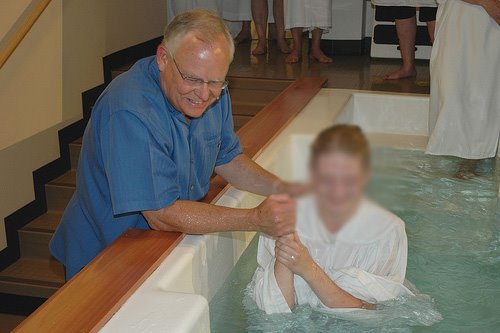 Henderson Hills Baptist Church is notorious for many reasons, the most notable being that two years ago on Monday they served as the hosts to a pretty infamous wedding party: mine.
But more recently, the church is entrenched in a controversy regarding baptism and church membership. Several weeks ago, the elders of the church put a proposal before the congregation requesting a bylaws change. If approved, water baptism will no longer be a requirement for membership at Henderson Hills.
Although the elders presented the proposal, senior pastor Dennis Newkirk is taking the brunt of the criticism from local and national Southern Baptists. And if the old boxing rule "he who loses his cool first loses" holds true, the critics of Henderson Hills lost this debate in the first round. They're mad. In fact, the Baptist Messenger (The Oklahoma Southern Baptist's periodical) has dedicated an entire issue to a campaign against Henderson Hills' proposed bylaw change. Add that to some search-and-destroy missiles from the blogosphere and about all that's left is vulture food.
Both arguments are arguments from silence. The Scripture doesn't explicitly link or separate water baptism and local church membership. The Southern Baptists argue that church history has linked baptism and membership from the days of the Church Fathers. True, but the church has linked a lot of other things throughout history that we're not so proud of. In fact, if we want to go there, for a good part of church history, a person was baptized in a corner room of the church so that they could be baptized completely nude. They weren't dunked backwards, but went straight down into the water with the pastor's hands on their head. If we want to point to church history to validate our arguments, let's go whole hog.
History - even hundreds of years of history is not a source of Truth. Yes, we should tread softly when it comes to rethinking ideas that have been held for hundreds of years, but the argument "we've always done it this way," does not carry water. We have to deal with the Text, and if we can't prove a belief from the Text, we must tread even more softly.
Where Scripture is silent, we have the freedom to act wisely. When we encounter an issue for which there is not an explicit principle or command in Scripture, it is perfectly acceptable to make decisions using the wisdom God gave us. That's why we have wisdom in the first place.
But when we make wise decisions about issues not covered by a principle or command in Scripture and then apply those decisions as laws for others to follow, we start to opperate in sketchy territory. In fact, over the years we've developed a term for that kind of behavior: legalism. Remember the Pharisees? They were well-meaning guys who wanted to be so Scripturally accurate that they started making their applications of the Law into laws themselves.
Now, don't miss my point... the Pharisees of Jesus' day missed God altogether. I'm not saying the critics of Henderson Hills are the same way. What I am saying is that it's entirely possible to become so convinced of our extra-biblical decisions that we impose them on everyone else. Although we don't have Jesus' words on baptism and local church membership, we do have His words on making our own decisions into laws for others, and it isn't pretty.
Should local churches require new believers to be baptized by immersion prior to being accepted as members of the local church? Scripture doesn't say.
I, for one, find it hard to believe that we should require more to be a member of the local church than God requires for membership in the Universal Church. I find it hard to believe that the physically handicapped or gravely ill should not be allowed to be members of the local church. I find it hard to believe that we would refuse membership to an immature Christian who believes that his "sprinkling" identified him with the death and resurrection of Christ just as my immersion did, although we'll let immature believers with other nasty habits and beliefs in... so long as they've been baptized. That doesn't make sense to me.
But, if your local church wants to make water baptism a membership requirement, I think Scripture gives you that freedom. If your church wants to make the completion of a membership training class a requirement for membership, go for it. If you want to catechize new believers before you admit them to membership, more power to you. But don't throw rocks at the first church who disagrees with you.
I grew up Southern Baptist, and served on the staff of a Southern Baptist Church for several years. I'm proud of my heritage as a Southern Baptist - a denomination who has been on the right side of theological issues more often than it's been wrong. But it has been wrong before. And if the SBC, on the local, state, or national level, decides to remove Henderson Hills from its fellowship for making a decision on an issue not explicitly covered in Scripture, it will be the wrong decision.
There are many theological issues and interpretations worth dividing over. An issue that has no basis in Scripture, either positively or negatively is not one of them.
One More Israel Picture

Sorry the formatting of my last post came out so weird. I tried to fix it once, and made it worse. Now I'm to the point where I've been messing with it for so long I'm ready to just be done with it. It won't win any layout awards, but I'm done caring.
This was the last picture I wanted to include for now (I have 347 more you haven't seen, but you'll have to buy me dinner if you want to see the rest).
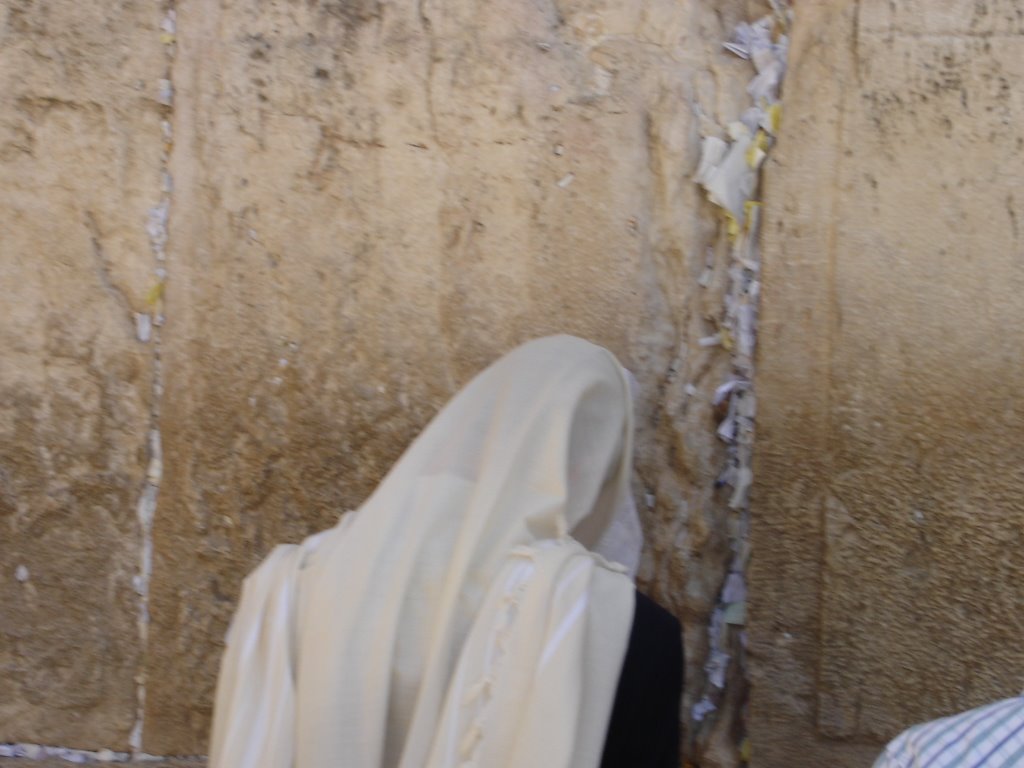
This is an Israeli soldier praying at the wailing wall in Jerusalem. It seemed strangely appropriate today.
Israel photos.
 Well, if you push enough buttons, you're liable to fix something. I've been working for the past several weeks to get some pictures posted from our trip to Israel. Somehow today it's working. So...
Here's my favorite picture of the trip. If you've ever had anything to do with Gene Getz, you'll know he's the most humble man alive. But did you know he was humble enough to smear Dead Sea mud all over himself and pose for 50 pictures? He did.
 This is the Mt. of Beatitudes, taken from the Sea of Galilee. The Sea of Galilee was Kari's favorite place on the trip. It remains relatively untouched by modern civilization. Only one city, Tiberius, can be seen on its banks, which gives the view a very authentic feel. One evening while we were there it got very windy, and the waves got pretty big. I could sympathize with the disciples - I would have been pretty nervous if someone had come walking to me on the water.
 The Treasury Building at Petra. No, they didn't really keep money there. It was a burial cave for a king. And before you ask, yes I looked inside - I didn't see the Holy Grail.
 This is me with my angel in the shepherds fields with Bethlehem in the background. I tried to get her to sing something angelic, but she was afraid she'd scare the sheep.
That's all for now. I had one more picture I wanted to post, but for some reason the upload isn't working again. So, I'll be happy for what I got uploaded, and post the other one when blogger commits.
Wow.
I'm working on figuring out how to post some of our pictures from our trip to Israel, and am having a hard time. Add that to the fact that I'm extraordinarily busy with some writing deadlines and haven't been able to post in a while.
While I'm waiting for life to calm down, you have to check this guy out. Make sure and watch the whole routine.
While I'm waiting for life to calm down, you have to check this guy out. Make sure and watch the whole routine.
Over the river and through the woods...
 Kari and I leave Saturday for two weeks in Israel. It's a trip we've been looking forward to for nearly six months. We'll be traveling with Gene Getz, the Pastor Emeritus here at Fellowship, and a couple of families from the Dallas area. It's truly the opportunity of a lifetime.
We were worried for some time that my health wasn't going to allow us to go, but God has been good and answered our prayers. Our prayer all along has been that God would heal me miraculously - to the point that even our doctors were amazed. Last Friday, my doctor bragged and bragged about the progress I've made, "beyond what I could have asked or imagined." Those are his words, not mine. Seems like I've read those words before...
We're excited to walk in the dust of a land that has thousands of years of history. We'll walk in the storied field where David had his showdown with Goliath. We'll stand on the mountain where Elijah asked the prophets of Baal whether their god might be too busy in the john to answer their prayers, and we'll walk through the Garden of Gethsemane. I've heard I'll never read my Bible the same way again, and certainly hope that's true. We couldn't be more excited.
My mom and grandmother, on the other hand, couldn't be less enthused. I keep trying to persuade them that it's okay - if something goes down in Israel it's only a local flight to heaven. Somehow they don't share my perspective.
While you're pining away in the absence of a blog, look for me on this wailing wall webcam. I'll try not to make a fool of myself, but we'll be there one day. If you know me, you know I'll be the guy wearing orange.
Shalom.
I don't know where I am!
 Airports are the best places to meet some of the most interesting people on the planet. I always enjoy trips that require me to fly because I'm always surprised by something (or someone) that I see. It's a ripoff if you ask me - a hundred years ago people only had to pay a nickel to watch a freak show. Today you have to buy a plane ticket. Stupid inflation.
Last weekeend, Kari and I flew to Charleston, South Carolina to visit my baby brother. At the time we booked our flights, there was no direct flight to Charleston from Dallas, so I got to enjoy people watching at 3 of America's finest airports. With the exception of one lady who didn't seem to realize she was breast feeding her baby in the middle of a teeming mass of people, and two teenage girls traveling alone who reminded me why we are never having daughters, I was fairly disappointed with the number of weird things I saw in Dallas, Charlotte, and Charleston. It certainly wasn't worth the $1000 freak show ticket.
I did, however, have one rather sad encounter with a lady at the gate for our flight out of Charlotte.
A very pretty old lady, probably in her nineties, was wheeled to the gate by a sky cap, and promptly left by herself. The sky cap didn't give her further instructions or even a "thank you." She just wheeled the lady to the gate and left her. In hindsight, I think the sky cap probably realized she wouldn't be getting a tip from this elderly lady, and was ready to move to someone who would be a little more gratuitous.
Obviously confused, the elderly lady started looking around. Panicked, she looked at me and exclaimed "I don't know where I am."
I was tongue-tied. I didn't want to give her too much information, thus insulting her ("You're in a wheelchair honey."), but I didn't want to give her too little information and leave her still confused ("You're on the planet earth. Time to come back"). So, I opted for the middle-ground. "We're in Charlotte, North Carolina ma'am."
"No," she said, "I know where I am. I don't know where I'm going."
I persuaded her to show me her boarding pass so we could figure it out, and recognized that she was headed to Charleston, South Carolina on the same flight I was waiting for.
"No," she said again, "I know where I'm going. I just don't know how to get there."
With the help of another passenger who recognized the lady from an earlier flight, we got this poor woman calmed down and on the flight to Charleston where she was to attend the weddings of two of her grandsons.
Now, I realize that this poor woman was probably dealing with some senility issues coupled with the pressure of being in crowded airports all day. But as I sat down on the plane, I realized how common her quandry was to all of us. No, we're not often stranded and confused in airports, but don't we ask the same questions every day? Aren't the three statements she articulated the three things that cause uncertainty in our own lives?
Where am I? Where am I going? How am I going to get there?
Those questions are so simple, and yet they're at the heart of almost every dilemma we face today. In some sense, our spiritual life, occupational life, family life, and every other aspect of our lives demand that we consider each of these questions.
Try it out. Think about a decision you have to make today. See if it can't be answered by considering the answers to the 3 questions the woman in the Charlotte airport posed at me. You might be amazed.
You know what they say... "Out of the mouth of senile old women..."
Podcast?
 I got an ipod for Christmas last year, and finally got around to installing everything a month or so ago. I've subscribed to a couple of podcasts already, but am interested in who else you guys recommend. I've got John MacArthur, Phil Johnson, and the Catalyst Podcast.
Who am I missing?
E-Church
 The multi-site church philosophy has taken a turn for the cyber.
It started with the ability to have my church and my pastor in my neighborhood via various campuses throughout town. Now, I can have my church and my pastor in my room as I watch my church and my pastor in my underwear.
Like them or not, Lifechurch.tv is one of the most innovative churches in America. They're on the cutting edge of the use of technology in the worship service, and have recently launched their newest idea. Why go to church? Bring church to you.
Now, I feel the need to explain that I think these guys have hearts that genuinely seek to take the gospel of Jesus Christ to people who wouldn't ordinarily hear them. But I think this is a genuinely bad idea.
"Let us not give up meeting together as some are in the habit of doing, but let us encourage one another - and all the more as you see the Day approaching." Hebrews 10:25
While I applaud the desire for creativity and innovation within the Christian culture, I fear an internet campus is a short-sighted and incomplete concept of church.
Internet church is a great concept for taking the gospel to people who would not normally step into a church building - either because of preconceived notions or because of governmental restrictions. But reaching others with the gospel is only a portion of what the church is supposed to be about. Service, encouragement, accountability, and discipleship are left with gaping holes.
Sometimes you just need people with skin on. Internet church doesn't provide it.
Hannahisms Part Deux
 Someone confronted me yesterday on the fact that I haven't posted in a while. Cut me some slack... it's the end of the semester, which means two things: First, my brain is so chock full of unoriginal information that I couldn't come up with an original thought to post if I tried. Secondly, Hebrew is hard. I just walked out of an exam where the whole test demanded that I translate one of the minor prophets. Suffice it to say that Jonah wasn't the only person struggling to stay above sea level.
I'll be back around once I purge some of the material from my brain and get the opportunity to think clearly again. But for now, here are a few more Hannahisms. For the full story on Hannahisms, see my first post on Hannahisms here.
1. If God speaks to you outside the Bible, it's private conversation - stop telling me about it and keep it to yourself.
2. You can only be direct in peoples' lives to the point that they know beyond a shadow of a doubt that you love them.
3. The difference between philosophy and theology is that one has reason, the other has verses.
4. A saint is not a person without problems. A saint is a person who doesn't allow his problems to abort his ministry.
5. If you have a system that answers all the questions, you have a man made system and left God out.
6. You can preach a weak gospel and get converts. But weak converts attract wolves.
7. If God is not doing something, I'm going to rest, because He will start doing something soon and I want to be awake. It isn't my job to manufacture something for God.
8. I'm sick and tired of sermons that give me five ways to be a better husband. Preach Christ and in the depths of His forgiveness I'll love my wife.
9. Why do we read books? Before you can find your prince, you have to kiss a lot of frogs.
10. I can't dance. I'm an exegete. When everyone else is moving, I'm trying to discern what the meaning of "right" is, and everyone leaves me behind.
Guilty or Not?
 I don't know if this is news anywhere in the world other than Dallas, but the trial of Dena Schlosser ended today. She's the sicko mom accused of killing her baby by sawing off the baby's arms with a kitchen knife.
The verdict? Not guilty.
Apparently, the judge things she's insane.
Ya think?
Of course she's insane; she killed her kid. Not only that, she did it in a grotesque, inhumane, disgusting, cruel way. After killing her child, Maggie, Schlosser calmly dialed 9-1-1 and explained what she had done.
There's no doubt that she killed her daughter; Schlosser and her family would admit as much. There's no doubt as to the manner Maggie was murdered; Schlosser's 9-1-1 testimony describes the heinous crime in detail. She's guilty. Crazy, but guilty.
How is it that we as Americans have allowed insanity to be an excuse? Further, what hard core criminal is not insane? Adolf Hitler? Insane. Sadaam Hussein? Insane. Osama Bin Laden? Insane. Timothy McVeigh? Insane. Charles Manson? Insane. Jeffrey Dahmer? Insane.
They're all absolutely crazy. And they're all guilty. Their insanity is part of them.
So we find out that Dena Schlosser had a brain tumor that might have caused hallucinations causing her to kill her baby. Thus, Dena Schlosser isn't guilty. Don't we see how inconsistent that is? Is the brain tumor guilty? Isn't the brain tumor a part of Dena? If not, I'm sure the insurance company will be happy to learn that piece of information.
In our society's haste to shift blame, we've forgotten some of the values that made our country great: liberty and justice for all. Where there's no justice, there is no liberty. Where there's no blame, there's no justice. And where there's no blame, there's insanity alright, but it isn't where we think.
Meet Fred
 Meet Fred. Fred grew up in a Christian home as a preacher's kid and a military brat. His dad was both a pastor and a chaplain in the army. He had a normal childhood and, as any good preacher's kid would be, was in the church every time the doors were open. He learned the stories we all grew up with as children - Moses parting the Red Sea, Jesus turning water into wine, Samson killing thousands of Philistines by pushing down the pillars of a building - the stories that normally get young boys' blood pumping.
As Fred grew up in the church, he began to notice a problem: The passion, ferver and excitement in Christianity seemed to have disappeared. Churches that used to be bursting at the seams with those wanting to hear God's Word taught were closing their doors, while the majority of people that graced the church with their presence seemed bored and uninterested. They came to church for the same reason Fred did - it was what they had always done.
Fred also noticed that the church had lost much of what it used to stand for. People identified with Christianity because of the culture they lived in. After all if the culture is based on Christian principles, they reasoned, and I'm born into the culture, I must be Christian. Christianity wasn't unique any more. Being called a "Christian" didn't seem to mean anything any more. And the more Fred searched the more discouraged he became. Not only did the church seem to be losing ground, it didn't seem to care. It didn't seem relevant, didn't seem palatteable, and didn't seem to be effective at all.
Sound familiar?
Oh yeah. I forgot to mention. Fred lived nearly three-hundred years ago.
Fredrich Daniel Ernst Schleiermacher isn't exactly the person you would expect a conservative Christian to quote. Those familiar with his name recognize him as one of the fathers, if not the father of modern liberalism.
Schleiermacher was fed up with what he perceived as flaws in Christianity during his day, and set out to do something to defend Christianity against people who wrote it off as culturally and intellectually irrelevant. But in doing so, he committed several fatal errors that ultimately did more harm than good.
In "defending" Christianity, Schleiermacher gave up many of the basic doctrines that had been essential to the church since its beginning. He called miracles, revelation and inspiration "fairy tales," and proposed a church that was based almost solely on feeling. Religion was not about "Knowing or Doing, but a modification of Feeling or of immediate self-consciousness. And when you give up essential ground to critics just for the sake of agreement, bad things start to happen.
Sound familiar?
There's a discussion going on within Christianity in the 21st century that mirrors almost exactly some of the ideas that started Schleiermacher on his quest in the late 18th century. The church seems to be losing influence in America. The modern culture is disengaged. A majority of those who attend show up because they always have. The majority of America tells surveyors that they are "Christian," but truth be told, the majority of them see American citizenship and Christianity as synonymous terms.
But the problem is not Christianity.
Schleiermacher goofed when he examined the problem and decided that the problem was Christianity, and that Christianity needed to be rescued from extinction. So, he changed Christianity and gave up some of the essentials in order to be more culturally relevant. His answer to the cultural problem was to adopt a "generous orthodoxy" that agreed to fudge on some issues in order to bring more people in.
Did I say "generous orthodoxy?" Those aren't Schleiermacher's words. They're the words of a 21st century theologian who is attempting to answer the same question Schleiermacher answered. I think he's a well-meaning guy, who has aptly articulated a very real problem within Christianity today. But the problem isn't with Christianity.
Christianity does not need our help. It doesn't need to be rescued from anything. And it isn't our prerogative to change Christianity so we can get more people involved. We don't need to change Christianity to make it "relevant." Christianity is already relevant. We may change what we do to show Christianity's relevance, but Christianity itself can never be changed. And that's a very important distinction.
I'm all for cultural relevance. I'm all for creativity. But we have to understand that while we have freedom to be creative in what we do, we do not have freedom to be creative in what we are.
When Fred set out, he set out to solve a very real problem. But in the end, he sacrificed more than was his to give. I fear many of our brothers and sisters in Christ are dancing dangerously close to the same slippery slope that claimed Schleiermacher's life, and fear even more greatly that the result of their concessions will be the same. We're still paying for Schleiermacher's mistakes today. Let's not do the same for those who will come after us.
Ministry and Marriage
 Several weeks ago, the professors of my "Leading the Church in Effective Ministry" class brought in a panel of pastors to discuss leadership development and staff relationships with our class. In my four years at DTS this is the first class to focus solely on practical issues in ministry. I've been saturated with theology, history, Bible, and languages. I could diagram the Gospel of John in Greek, but couldn't perform a wedding, would drown the first person I tried to baptize, and would probably wear a baseball cap to the first funeral I performed. Okay, maybe that's a stretch.
Suffice it to say that this class has been a fresh air - the light at the end of the tunnel for me. We hear from pastors and ministry leaders on a regular basis who attempt to tie the theoretical with the practical so the pastors we send out on the field aren't simply educated fools.
One of the pastors on the panel on leadership development in this particular class was Gary Brandenburg, the new Senior Pastor at Fellowship Bible Church Dallas. I was so impressed with the things he had to say I offered to buy him lunch.
I bribe pastors and professors like this from time to time. They get a free lunch, and I get to pepper them with questions. It's a win-win situation.
Gary is a tremendous conversationalist, and one of those people who has tremendous insight on almost any topic you bring up. But the best came when I asked him about ministry transitions. My exact question went like this: "Gary, you've just made a transition into a church where the former Senior Pastor still attends, who built this church around his philosophy and vision for ministry. As the new senior pastor trying to build your own philosophy and vision into the ministry, how do you find the right balance between moving too slow and not moving at all."
He didn't miss a beat. "Chris, learn how to love your wife."
Huh?
I guess I must have betrayed my ignorance, because he went on to explain something that I thought was pretty profound. You see, there isn't an exhaustive checklist for how to love your wife. If someone tells you they can give you ten steps for how to love your wife, they're lying. They could give you ten steps toward better communication, but you can communicate until you're blue in the face and still not love your wife. It takes communication, but it also takes intuition, wisdom, foresight, experience, and a host of other things.
As a young husband learning to love my wife, I'm using a majority of the skills I'll need to learn to love a church. There aren't ten steps to being an effective young pastor (or an effective old pastor for that matter). You can't run down a checklist, or check a gauge, or read a book. Those things may be helpful in an area, but they're certainly not exhaustive.
I thought about his words a lot last night. They make a lot of sense. And I think the parallel goes even further. The skills I'm learning in marriage won't just help me in the first years of ministry - they'll help me throughout ministry. Maybe that's why Paul made it essential for Christian leaders to be those who "manage their households well" (1 Tim. 3:4).
Sometimes I've felt like I'm spinning my wheels in ministry, like my hands are tied. I can't be leading a staff right now. I can't preach on Sunday mornings. So many of the things I need to know to be effective are learned by experience, but I haven't felt like I'm in a place where I can get that.
But I am.
Learn how to love your wife. I can do that.
Distinct
 Here's a question that has puzzled me for a while: What one tangible thing sets me apart from an unbeliever? We're called to be the light of the world (Matthew 5:14), but what exactly is it that the world would see in us that they won't see in someone else who doesn't believe? We're supposed to "behave properly toward outsiders" (1 Thess 4:12), but what does that look like? It has to be more than just good works, because good works in and of themselves don't set Christians apart.
The Pharisees had good works. The false prophets had good works. Unbelievers do good works all the time. The Mormon church is one of the most benevolent organizations in the world, and they're a cult that denies the Christ of the Bible. For years secular organizations have run circles around Christians when it comes to doing good works in the world. So the Christian has to have more than good works when it comes to showing the validity of Christianity to a fallen world. The world often behaves better than us.
From the world's perspective, they don't need the virtues of Christianity because they often live more virtuous lives than us. We have good works, so does the world. We have community, so does the world. We have religiosity, so does the world. We have happiness, so does the world. In a large part, for everything the Christian has, the world has developed a counterfeit.
But three things remain: faith, hope, and love.
The world doesn't have faith because faith is based on hope, and hope is absent from the fallen world system. When we really get down to it, there's not even hope for tomorrow in the fallen world.
Just today, I talked to a guy (during my daily visit to Taco Bell) who just gave up giving up smoking. The way he figures it, medicine and technology will catch up with his bad habit before his bad habit catches up with him. He's only been smoking for five years - surely by the time lung cancer comes to him science will be able to clone him a new lung. After all, when he was a kid the idea of a heart transplant was science fiction; now we do them all the time.
Hope in technology? That's not hope. My hope is based on a certainty that has been proven time after time. His hope is built on wishful thinking.
The world also doesn't have a counterfeit for love. The world talks about love a lot, but in the context of "making love," "falling in and out of love," and "finding love." Love that can be made, fallen into and out of, or found is not love. Love is something that must be done. And the only true demonstration of love is that while we were still sinners Christ died for us (Romans 5:8).
The world talks about love because it doesn't understand it. The Christian has the ultimate example from which to live by.
But here's the problem: the Church does a lousy job of believing, hoping, and loving, and we're not doing anything to get better. Most churches do a pretty good job of getting their people to do good works but when those good works are done for the sake of doing good works, and apart from the overt presence of faith, hope, and love as a motivating factor, the works are useless. They fall into the same mental file with unbelievers as what the United Way or some other secular organization does. Consequently, the Church isn't a "city on a hill," but a streetlight in an already well-lit city.
Instead of thinking about how we can do more good stuff, maybe it's time for us to consider how the good stuff that we do can better reflect the things we have that nobody else does.
Let's "Converse"
 If you've read my blog very long, or know me very well, you know that I completely detest being put in a box. I have a hard time identifying whole-heartedly with a particular system, fad, movement, or trend - mostly because I feel like when I jump in one of those boxes I'm going to have to identify with all the baggage that goes with it. Then, when it comes time for a discussion, I find myself having to spend all my time cleaning up all the messes someone else has created rather than explaining what I believe to be true. That's no fun.
But I still read a lot about the various ideas out there. I just finished a biography of Jonathan Edwards that had some real ministry gems in it. I followed it up with a book by Len Sweet, a newer writer who has almost nothing in common with Edwards, but had a few really great insights. I'm intrigued by a lot of the newer movements within Christianity, although I've noticed something in recent years that bothers me about some of the newer "boxes" within Christianity and the terminology they use: they all want to be called "conversations." The last four or five books I've read about newer movements in the church all refer to the ongoing "conversation" in that particular circle.
The emphasis on "conversation" is born out of necessity. The Christian culture has shifted along with the American culture in the past couple of decades. We used to be a Mars Hill type culture, where ideas were taught and received. Now, we're a discussion-oriented culture, where ideas are thrown out and hopefully discussed on their merits. You see the shift in educational philosophies, in the political arena, and even in the boom of the blogosphere. Culture has become oriented around conversation.
The problem with Christianity, is that we tend to adopt lingo before we adopt practice, and sometimes before we even know what the lingo means. The trendy "conversations" today aren't conversations at all; they're lectures with friendly titles attached to them. "If you don't buy in to our new philosophy of Christianity wholesale, you're wrong and behind the times." That's the sentiment of the "conversation" right now, which is no conversation at all.
If we really want to have a conversation about the future of the Church in America, I think that's a really good thing. But that's not what is happening. Right now we're having an old-fashioned argument with a new title, and that's goofy.
Worship In the Dr.'s Office
 My aunt, wife of the pyromaniac, recently posted about the latest drama she experienced in the waiting room of a doctor's office. I don't know why drama always tends to find this family, but my wife made me add to our wedding vows that I would never vacation with them - an activity that ranks on the risk scale just under skiing slopes only reachable by helicopter. If you haven't already, read Darlene's post about her visit to the doctor's office, and search for the prequel. Then sit back and be amazed, because these are not isolated experiences for them. Wherever they are, weird people seem to show up on their most outlandish behavior.
I've had my own share of doctor appointments recently. The doctors have finally diagnosed me with what's called "Ramsay Hunt Syndrome." To put it shortly, in a very few lucky people who had chickenpox as a kid, the virus hangs around and reappears in the form of shingles later in life. For a very few of those lucky people, those shingles decide to attack the inner ear rather than the outside of the body, and eventually attack one of the major nerves in your face. The result is a paralyzed half of your face accompanied by a really fun ear ache. There's really not a treatment; the doctors just hope it will go away. And it certainly will... sometime in the eternal scheme of things. But fortunately, it's not life threatening and isn't really painful - just annoying. So life is good.
You should know that I hate doctors. I'm deathly afraid of needles - deathly afraid of needles. So I dread doctors just because I know they might recommend a shot or blood work, and I wouldn't have any choice to submit to the humiliation of asking some 20 year old nurse to let me lay down on the cot while she tries to locate a vein, and then passing out two or three times throughout the process. Nurses earn their money with me.
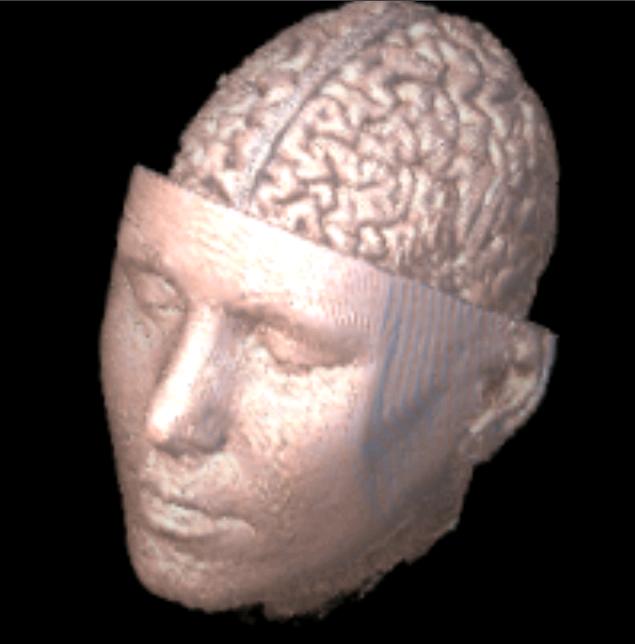
But this whole experience has been fascinating to me. It turns out, according to the ENT, that all my problems are due to the swelling and degeneration of the 7th cranial nerve - a teeny tiny nerve that runs along my jawbone, and governs all the muscle movement in the right side of my face including eye blinks, smiles, chewing, frowning, and everything else you can think of. That one teeny tiny nerve malfunctions, and the whole face goes limp. Pretty cool huh?
One of the neurosurgeons who looked at me attached some electrodes to my face and plugged me into a wall outlet to see what would happen to my face (If nothing else, the experience served as a deterrent for my ever committing a crime that would lead me to the electric chair). By sending an electrical shock through my face, the doctor was able to gauge the exact percent my nerve was functioning. Amazing.
If the swelling of one tiny nerve can cause me to look like a wax museum statue that got placed too close to the furnace, imagine the number of things that work perfectly in harmony every single day. Our body is perfectly designed by God, fearfully and wonderfully made. How can you reach any other conclusion? The intricasies of the body combined with its delicate balance is truly an amazing thing. We can't even begin to understand it to the point that we can fix it, but God had the infinite wisdom and skill to design it, create it, and to continue to sustain it as long as I live on the earth.
Last week, I went to the doctor. I passed out twice, but I worshipped there too.
How precious to me are your designs, O God; how vast the sum of them!
Were I to count, they would outnumber the sands; to finish, I would need eternity. (Psalm 139:17-18)
Out Sick...
 No, I haven't totally given up on blogging. And no, I haven't been consumed by the TeamPyro megablog, which has turned out to be the bloggosphere's equivalent of a black hole threatening to suck the life out of measley blogs everywhere. I've been pretty under the weather for the past three weeks, and struggling to stay above water in Hebrew took precedence over blowing off steam on my blog. I'm still not out of the woods with the illness, or with the Hebrew, so I don't know how much I'll add over here until I get back on my feet, but I'll be back.
One of the highlights of my seminary day is my trek to a Pizza Hut/Taco Bell combination store for lunch. I've been going with some regularity for the past 3 years, and have been trying to build a bridge to Christianity with a couple of the employees there who have become my friends.
John is the guy at the counter, and he's my favorite. For 3 years we've made casual conversation in passing - usually about sports, but occasionally about politics or some other current event. I don't know why I'm surprised by his intelligence - maybe it's because he's thirty-something and still working full-time as a cashier at Taco Bell. But he's bright, articulate, and as far as I can tell, as far away from Christ as he can be. But we've never broached the topic of Christianity, until today.
He knows I'm a seminary student... I'm usually flipping through Hebrew or Greek flashcards, or reading a conspicuously Christian book as I eat. It's not tough to tell what I'm up to. But I've never pushed the issue with him... just waited for him to bring it up. Today he did.
"Hey Chris. What do you think about dispensationalism?"
Uhhhh.... Not exactly what I expected from a guy who works at Taco Bell, teaches me new curse words from time to time, and who has never touched the topic of Christianity.
Turns out, he read an article in the Dallas Observer, a fairly liberal newspaper-type publication about Dallas Seminary and some controversies about dispensationalism at DTS that are actually old news although the article came out last week. I hadn't read it, so I looked it up when I got back to school.
If you're interested in dispensationalism, or some of the current discussions within dispensationalism right now, you might be interested in reading the article here. It's a really long article, but does a fairly good job in a lot of respects. It minimizes some of the distinctions between traditional and progressive dispensationalism that I wish it had brought out more, but I was overall fairly surprised at the thorough treatment given in such a liberal publication that isn't at all committed to explaining biblical truth. Dispensationalism has some black eyes, and the article brings them out, but does a pretty good job at painting dispensationalism overall in a fairly good light.
If nothing else, the article gave me a really bizzarre starting point to lead into sharing the Gospel with a guy at Taco Bell.
Will and Grace Update
According to the website of the American Family Association, producers of Will and Grace have elected to pull the show featuring Britney Federline's "conservative Christian" character due to pressure placed on them by the viewing public.
Some have asked, "Why do you care? Shouldn't we expect unbelievers to act like unbelievers? What good does it do to boycott programs because of their moral content?"
The answer is, as a Christian, I understand that unbelievers won't conform to the moral standard of Christianity, because they can't. But as an American, I have the ability and privilege in a free-market society to affect change in culture through my vote.
While the fact that NBC has taken this offensive episode off the air doesn't get them a step closer to Christ, their real need, it does prevent NBC from further murking up already muddy waters by propogating stereotypes of Christianity that are an unfair characteristic of the belief-system I follow. The more often secular television unfairly presents a stereotype of what Christianity is about, the more baggage we have to fight through to reveal the Truth behind Christianity.
I'm between classes right now, but wanted to post this while I had a chance. Maybe I'll further clarify my thoughts on this issue later.
Failure is not an option... or is it?
 I'd love to be a weatherman. If God ever calls me out of the ministry, and closes my second dream of being a Major League Baseball umpire, the third choice is meteorology. Think about it. The weatherman has the most cush job in the world - show up to work, gain celebrity status, point to a couple of maps... and oh, by the way, you can be wrong ninety percent of the time and nobody cares. As long as you mention high pressure systems, hot and cold fronts, and barometric pressure somewhere in your presentation, the world is generally happy. Oh, they joke about you behind the scenes, but you laugh about it all the way to the bank. I could live that kind of life.
Isn't it ironic, then, that I've chosen a career in which people have historically given themselves absolutely zero margin for error? Ministry is a career that deals with the most important issues in the lives of people during the most significant times in their lives. We are present to kiss babies, are used to lead those children to faith in Christ, baptize them, marry them, and sometimes bury them. Name a truly significant life event, and the chances are the pastor will be there. So our demand of ourselves for success is in some senses understandable.
But it's also driving us nuts.
A Major League baseball player who fails to hit six out of ten times will make it to the hall of fame. But we don't have a philosophy that allows us to fail, so we hide our faults and hate ourselves. We're an insecure bunch, which casts us into a dangerous tailspin of failure, hiding, hating ourselves, which leads to more failure, hiding, and hating.
How do we get out? By changing our perspective. Most pastors think their drive towards one-hundred percent success is a product of their high view of God. It isn't. Instead, it's a product of the opposite: a low view of God the believes success is (1) something that is commanded of us, and/or (2) something that is attainable.
God has not called us to be successful; He has called us to be faithful. Accordingly, He has not given us the tools to be successful. Success in ministry is entirely connected to the hearts of people - something over which I have no influence as an individual. Thankfully, God uses me from time to time as His instrument in affecting the heart, but heart-change is not my responsibility.
When I understand that success is not my responsibility or God's goal for me, I'm free to serve without fear. I will fail, but I pray to God I won't quit. And that is success.
Tolerance?
 This just in from Fox News
NEW YORK — Britney Spears will guest star on an episode of "Will & Grace," NBC announced Tuesday. The pop star will appear as a Christian conservative sidekick to Sean Hayes' character, Jack, who hosts his own talk show, on the April 13 episode, the network said.
Jack's fictional network, Out TV, is bought by a Christian TV network, leading to Spears contributing a cooking segment called "Cruci-fixin's." As a young girl, the 24-year-old Spears was a regular on "The Mickey Mouse Club." After becoming a pop singer, she starred in the critically panned 2002 film "Crossroads."Last September, Spears gave birth to her first child, son Sean Preston, with husband Kevin Federline. "Will & Grace," which also stars Eric McCormack, Debra Messing and Megan Mullally, is in its eighth and final season. It airs Thursdays at 8 p.m. (EST).
This is probably not the best place for this public confession, but I watch Will and Grace fairly regularly. I don't agree with the agenda behind the show, and I certainly don't care for the casual way the cast members deal with serious issues. But dang it, the show is funny.
This episode might spell the end of my toleration.
I'm confident the writers of Will and Grace will present a fair portrayal of conservative Christians. I'm sure Britney Spears (ahem... Federline) will present an intellectual, caring, loving, Christlike portrayal of Christianity. Yeah right.
I could be wrong, but isn't this head-on attack of other ideals the exact same intolerance that has been the rallying cry for the homosexual agenda over the past ten or so years? When we do it, it's intolerance - hate speech. When they do it, it's activism.
Honestly, I wouldn't have a problem with Will and Grace promoting whatever agenda they want to promote; I can change the channel if it offends me. But if they're going to dish it out, they had better be ready to take it. The tolerance argument wins no sympathy from me if it isn't going to go both ways.
Hannahisms
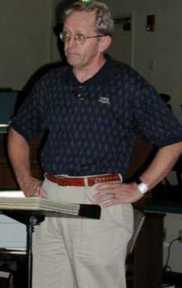 I don't know if you're familiar with Dr. John Hannah, professor of Church History at Dallas Seminary, but he's one of my professors this semester. He's a quirky man, self proclaimedly, but also one of those people with the ability to create "sound bites" of wisdom with nearly every sentence.
For the most part, church history isn't one of the subjects that get my motor running. Mostly, I pay attention because (a) my grade depends on it, (b) I understand how important history is to an understanding of the future, and (c) because you never know when Dr. Hannah is going to say something great.
I've begun the habit of taking two sets of notes simultaneously. The first set of notes are notes about church history; diagrams, dates, names, and doodles of stick people who take up the space in the margin. The second set of notes are what I call "Hannahisms" - usually a sentence or two that sum up what would have taken the majority of us 3 weeks of blogs to say. Sometimes they're funny; sometimes they're serious. But they always make you think.
Since I've been pretty swamped between work and school, I thought it might be good to give you a top-ten of my list of Hannahisms for the first two class periods. Let me know if any jump out at you one way or the other - they're fun to think about and discuss.
1. Seek more than excitement. It is a shadow of eternity, but that is all.
2. A friend is a person who never believes the best things you say because he knows you're a liar, but never believes the worst things you say because he thinks better of you than that.
3. There has never been a time in our history when there were so many of us who have had so little influence.
4. If you're a Christian and willingly disobey God, He will judge your sin and break every bone in your body. In that day, thank Him for His grace.
5. A man is simply not equipped to meet the needs of a woman.
6. People preach toleration when they don't have power. Once they get power they stop preaching it.
7. Committees are places where minutes are kept and hours are lost.
8. You can get away with sin, but not forever. You can also blindfold yourself and walk across the interstate safely a time or two...
9. If God has called you to be a janitor, you should not stoop so low as to be a clergyman.
...and my favorite...
10. Don't think too highly of yourself. The best this world will do for you is to build a statue of you so the birds can come defecate on your face.
"Real" People Make the Best Fiction
 As I've mentioned before, my wife and I are hopelessly addicted to "24," the Kiefer Sutherland drama that packs more heart pounding drama than a pacemaker with a turbo gear. A new season of 24 premiered on Sunday and Monday, and Kari and I were settled in our seats at promptly 7:00 to start the 24 hour saga that will fill our Monday nights for the next several weeks. We weren't disappointed.
After watching the Monday night edition, our adrenaline levels were at dangerous levels, so we flipped channels to see if there was something on that would calm our nerves. Believe it or not, we have sixty something channels on our satellite package and couldn't find anything better than "The Bachelor." (which speaks more to the lack of good programming on TV than it does the quality of "The Bachelor)
I've been promising people for a long time that the Reality TV phase is on its last legs, but somehow these shows keep reappearing. And sadly, America still seems to be interested in reality shows ranging in topic from washed up TV celebrities who want to learn to ice skate to desperate singles attempting to win a marriage proposal.
I don't know what the fascination is with Reality TV. Personally, I think of it a lot like I think of a really gory car accident. You know you shouldn't look, and determine to drive by, but at the last second you always sneak a peak.
But there's something fundamental that bothers me about Reality TV: It doesn't picture reality.
Maybe some of you had a budget the size of NBC's, or ABC's millions of dollars behind you when you lined up the fifty girls who wanted to date you so bad they'd quit their jobs and leave everything behind to travel to bite, scratch, and pull-hair over who would get your hand in marriage on national television. I missed out on that bit of reality.
Maybe your first job out of college was one where you worked in a swanky building, got chartered around on a private jet, and pitched your proposals to high-ranking executives of the world's top companies, in hopes that you would impress a boss who has more power than the President of the United States, but who obviously doesn't have the authority to hire a decent hairstylist. But for the vast majority of Americans, that's not reality.
Where am I going? I'll tell you.
Authenticity is one of the things I value most in my life and ministry. I feel that others deserve a pastor who approaches them with an appropriate level of openness and vulnerability, and expect that from others in return. That means being "real" with the people I serve, rather than someone who preaches down to people from a podium set high above them. I'm not talking about guys who feel the need to turn their public speaking opportunities into confession time, but about being a real person who leads a real life trying to do the best he can to bring glory to a real God. After all, if people don't perceive me as a real guy leading a real life, why should they perceive the God I speak about as being real?
But television is attempting to redefine authenticity. The conversations with "The Bachelor" are supposed to reveal him as a "real" guy who's having a difficult time choosing between fifty of the hottest girls on the planet. We're supposed to feel for him. He has a tough task ahead of him.
Who are we trying to kid?
That guy's not real. He's not revealing his innermost thoughts. On national television? Yeah right. The rare parts of the show that are not scripted are still a part of the game. "Authentic" comments are calculated; guarded. There's not an ounce of reality there, but we're supposed to think there is.
We're supposed to identify with the reality that television is creating - a reality in which "authenticity" is just a part of the game.
That's scary. When authenticity because a part of the game, it's no longer authenticity. When we become self-revalatory because of where it will get us, we're denying who we really are: selfish, self-absorbed, insecure manipulators who will pretend to be "real" to enhance the charade. And that type of authenticity, frankly, is conceived in the pits of hell.
IWJO
 I never got into the WWJD kick. I never owned a bracelet, or a t-shirt, or a hat, or a belt, or the trendy boxers that sported the "WWJD" fad phrase. I overanalyzed the whole fad, (that's what they train us to do in seminary), so I never got around to buying a bracelet. I wasn't really comfortable asking myself "What would Jesus do?" in a questionable situation.
There was the time I forgot to order the pizza for our huge youth lockin. The teenagers were there, the volunteers were there, the drinks were there, but we were starving... no pizza. I didn't have a bracelet on, and it's probably a good thing because I probably would have gone in search of a kid with 5 pizza rolls and a few breadsticks hoping to multiply them. That could have been disastrous. Instead, I just ordered the pizza.
Then there was the time when the Coke machine ran out at the church. If I had donned a bracelet that morning, I probably would have told people to go to the water fountain to get their Dr. Pepper fix. After all, Jesus turned water into wine at a wedding... maybe I should try to turn the drinking fountain into a Dr. Pepper fountain.
Jesus was God on earth. He did everything to the end of dying for the sins of world. Maybe WWJD is not the most logical question I can ask myself in every situation. Yes, I understand the spirit behind the bracelets, and think it's admirable to ask ourselves what Jesus would think about our actions, specifically in moral questions, but I couldn't quite be so pious to wear a bracelet around advertising to the world that I planned to do the things Jesus did throughout the day.
But here's a fad I could get in to. I'm crossing my fingers like crazy that someone gets me a IWJO (I Watch Joel Osteen) pin for my birthday. It's this year's hot item, and I want to catch the fad before it gets rocking so I'm in on the ground level.
I'm not such a big fan of Joel Osteen, honestly. He doesn't believe in the Trinity, and prefers not to talk about sin, or judgment, or anything that might be considered a "negative." But he's got such a great smile, and a southern drawl that has the ability to draw you in. He's captivating. And his church service is good entertainment.
Season 5 of the TV show 24 comes out this Sunday, and I can't wait for that. Kari and I love to watch 24. It's full of suspense, action, drama, and betrayal. We can't get enough. But hey, Osteen's show is like that too. Joel's pretty subdued, but his wife is fiery. When she starts talking, I'm on the edge of my seat. Heck, she took on a flight attendant not long ago because the flight attendant hadn't cleaned out her seat properly. The FBI got involved and the Osteens were invited to take another flight. Days of Our Lives has nothing on this...
IWJO is the fad of the year, and I'm jumping in early. You should too. These pins will be harder to get than an Oral Roberts prayer hankie. Don't say I didn't warn you.
Praying the Scriptures
 "Most Gracious Heavenly Father, we thank you so much for this day. Thank you for [insert daily event here]. Please bless this food to the nourishment of our bodies, and our bodies to your service. In Jesus Name, Amen."
That's what God heard from me for about fifteen years. When it was my turn to pray at family dinners, that's what I came up with. On special occasions, I would read the cross-stitch prayers that hung behind our dinner table to mix things up a bit, but for the most part I stayed true to the original prayer you can read above.
I meant it too - every word of it. Throughout my growing up years, I knew God was the Most Gracious Heavenly Father. I was truly thankful for the day, and the day's events. And I hoped Mom's meatloaf would bless my body, because it evidently hadn't blessed the body of the person who ate it before me.
I prayed that prayer for years and years. It was heartfelt, sincere, and to the point. But it was also a habit.
I didn't realize it until I was asked to pray for a Bible Study I was attending, and I accidentally slipped in the "bless this food" part at the end. There were doughnuts and coffee at the Bible Study, so nobody else cared, but it hit me hard.
This is the Sovereign God of the Universe Who spoke the Universe into existence, and I come at him with cliche? Something was wrong. If I stepped back and thought about it, I meant what I said. But I had to step back to consider it. My sincere prayers had become trite formulas, and that was a problem for me.
So I started reading. I read every book on prayer I could get my hands on at the small Christian bookstore near my apartment. But nothing flipped the switch. I loved to study the Bible, but couldn't quite get my prayer life going.
One day, I mentioned my quandry to one of the interns at the church where I was working. He showed me something I've been using off and on ever since. Maybe it will be useful to you as well.
He called it "Praying the Scriptures," and the premise is simple: You attach your prayers directly to the Bible Study you're doing. This way, the Bible Study (God talking to me) and prayer life (me talking to God) are intermingled like a conversation I would have with someone sitting across the desk from me.
It's especially easy with the Epistles, but can be done with any book. Here's how it works:
First, I read a short passage of Scripture I've been studying. Say I'm reading Ephesians; I might start with Ephesians 1:1, where I read:
"From Paul, an apostle of Christ Jesus by the will of God, to the saints in Ephesus, the faithful in Christ Jesus. "
After reading the verse, I begin to pray chunks of the verse at a time like this:
"Lord, thank you for the ministry of Paul and for the lives he touched while he ministered on the earth. Thank you for gifting Him as an apostle. Help me to understand and implement my own spiritual gifts as Paul did. Just as he was an apostle by the will of God, I know that it is Your will for me to serve You using my gifts as well. Lord, Paul mentions that the Ephesians were faithful in Christ Jesus. I want to be like that. Help me to be faithful to you above and beyond anything else in this world; that's my desire."
Then I would move to verse two, and so on.
For the most part, it has helped me break out of the "habit" of praying, and has allowed me to view prayer for what it truly is. This month, as you might guess from my previous blog, I'm praying through 1 Samuel. Today my prayer was that my ministry would be protected from the selfishness that plagued Saul, and that I might have a heart like David's.
Happy "Pimped Out" New Year!
 This morning I set a world record for the shortest amount of time to hold a New Years Resolution. Unfortunately after beginning the paperwork, I was told that a witness from the Guiness corporation needed to be onhand to witness my flop before it was recorded in the Book of World Records. I'll make sure they get my Christmas Card next year...
Prior to our move, I had been doing pretty well at keeping in shape. I ran two or three miles, two or three times a week, in addition to playing softball and volleyball with the guys from church. But a new job, finals, packing, moving, and Christmas bumped my exercise regimen down on the priority list. Although I know I should excercise, I hate excercise with the white hot intensity of a thousand flames, so watching it fall off my to do list was not a sad occasion. Nevertheless, now that we're starting to get unpacked, I resolved to get back into some type of excercise program.
Right.
This morning I woke up with a cough, and a stopped up nose. God doesn't want me to excercise, I'm sure of it.
So I started over from scratch. After all... what's really important? Shaving ten seconds off my mile time, or growing closer to God? (Feel free to comment on the art and grace with which I justified my failure of the first set of resolutions).
This year, instead of making a major resolution (turning this ship requires small adjustments), I decided to set some goals for my devotionals this year. You might remember, I talked about pimping my devotional time several weeks ago. When I do things right, I set New Years resolutions every month, so it only goes to reason that I should start the year by planning to do my devotional time right. So if you're interested in this philosophy and don't already have a devotional plan in place, I'd encourage you to work alongside me this year. From time to time, I'll post some of my observations/applications, and expand a little on how I go through the process. There are certainly other ways, but this one has made a huge difference in my lifel maybe it will do the same for you.
Check out the link above if you need a refresher on the "rules." (Make sure to read the comment I made about commentaries. That's pretty important to the overall philosophy... I very rarely use commentaries for my devotional time because I tend to cheat when the going gets tough, which defeats the purpose).
If you're up to it, here's the schedule I plan to follow this year:
January - 1 Samuel
February - Luke
March - Ezra
April - 1 Thessalonians
May - Esther
June - 1 John
July - Lamentations
August - 1 Peter
September - 1 Kings
October - Colossians
November - 2 Kings
December - Titus
2006, here I come!
Subscribe to:
Posts (Atom)


