
I don't have any idea why Tim Stevens asked me to read the first manuscript of his new book "Pop Goes the Church." My hunch is that it has something to do with the fact that we share the same uber-cool haircut.
But I just finished my first read of the manuscript, and I think the book is going to be worth reading. It's part "Dear Church," part "Simply Strategic Stuff," part "Made to Stick," and almost completely thought provoking.
I'd love to give you a couple of my favorite quotes, but I can't. I'd love to tell you exactly what the book is about, but I'm not supposed to. I'd even like to tell you whether or not I love it or hate it, but I've been sufficiently threatened to not let the cat out of the bag. So, I won't.
So, consider this my "nah nah nah nah naaah" post. I've read the book, and you haven't. But you will when it comes out. And you should. Like it or not.


Funerals are Mandatory...
I spent yesterday traveling to and from a funeral on the other side of the metroplex. The funeral was for the step-mother of a member of our team who finished well, but lost a battle with cancer last week.
I'm not the most insightful leader, or the person who finds myself with the need (or ability) to regularly bestow leadership lessons to people who read my blog (I leave that to other, better leaders). But one of the leadership lessons I've learned in my career that I think is often neglected is this: when it comes to the people you serve alongside, funerals are mandatory.
Funerals aren't fun. They're not easy. Nobody enjoys them (except perhaps the funeral director who is cashing the check). They often come at the wrong time, in the wrong place. We're launching a major initiative for singles on Thursday, and there are a lot of loose ends that still need to be tied up for that. I needed to be in the office yesterday. But I learned a long time ago, if you have a chance to serve someone by attending a loved one's funeral, you need to do everything within your ability to be there.
You show your team that you're behind them, even in their darkest moments, and they'll follow you into battle.
I'm not the most insightful leader, or the person who finds myself with the need (or ability) to regularly bestow leadership lessons to people who read my blog (I leave that to other, better leaders). But one of the leadership lessons I've learned in my career that I think is often neglected is this: when it comes to the people you serve alongside, funerals are mandatory.
Funerals aren't fun. They're not easy. Nobody enjoys them (except perhaps the funeral director who is cashing the check). They often come at the wrong time, in the wrong place. We're launching a major initiative for singles on Thursday, and there are a lot of loose ends that still need to be tied up for that. I needed to be in the office yesterday. But I learned a long time ago, if you have a chance to serve someone by attending a loved one's funeral, you need to do everything within your ability to be there.
You show your team that you're behind them, even in their darkest moments, and they'll follow you into battle.
Is Worship an Experience?
I'm reading a book right now by two guys I really respect in ministry (Simply Strategic Growth, by Tony Morgan and Tim Stevens). The book is incredibly helpful in thinking strategicaly through different aspects of church ministry and church administration. It has 99 short chapters on how to think through everything from communicating vision to dealing with the out-of-tune soloist. I've really enjoyed reading it - if you're at all involved with administration or leadership within a church, you should buy it. But they keep using a certain phrase that I'm not altogether comfortable with even though I've caught myself using it before.
The book talks several times about inviting people into a "worship experience."
To me, that language speaks of worship as something that happens to you, rather than something in which you are an active participant. I'm not denying that worship involves experience, but I'm not sure the thing we want to be inviting people in to is primarily about our experience. We should be inviting others to participate in such a way that God experiences our worship, and that outsiders observe that.
I'm familiar with the church these two guys served at the time they wrote the book, and don't think their church reflects their wording. Although there are churches out there where worship is a spectator sport, I don't think their church is one of them. But I think the language is important enough to point out. What we're inviting people to on Sunday, I hope, is not a worship experience as much as a worship opportunity.
The book talks several times about inviting people into a "worship experience."
To me, that language speaks of worship as something that happens to you, rather than something in which you are an active participant. I'm not denying that worship involves experience, but I'm not sure the thing we want to be inviting people in to is primarily about our experience. We should be inviting others to participate in such a way that God experiences our worship, and that outsiders observe that.
I'm familiar with the church these two guys served at the time they wrote the book, and don't think their church reflects their wording. Although there are churches out there where worship is a spectator sport, I don't think their church is one of them. But I think the language is important enough to point out. What we're inviting people to on Sunday, I hope, is not a worship experience as much as a worship opportunity.
Resolution - Summit
Hope you have a great New Year. I don't know if you're a resolution person, but New Years Resolutions are some of my favorite things. I'm a goal setter by nature, so I love the opportunity to see a clean slate and to set some goals for a brand new year.
This year, I'm really excited about one of the "resolutions" we're making with the Young Adults here at McKinney. I'm sure the plan will morph a bit over the year because it's a brand new idea, so I'll blog about it now while we're only 1 day into it so I can follow-up later.
We've invited every one of our Young Adults (married and single) to read through the New Testament in 2008. Coincidentally, if you read one chapter a day, for five days a week, you read through the entire New Testament in almost exactly one year. I got the Bible reading idea from Watermark Church who do a Bible Reading Plan called "Join the Journey," in which they include devotionals written by members of their church on each passage of Scripture. When I was at Fellowship (ahem... Chase Oaks Church), we adopted portions of the Journey, and created Summit. Summit turned out to be one of the most rewarding projects I've ever been a part of in ministry, so when I made the move to McKinney I decided to take parts of it with me.
This year at McKinney, instead of the devotionals (which were extremely difficult to manage, edit, and publish), all of the teaching in our Young Adult groups on Sunday will coincide with the passages the group read the previous week. So, we'll be reading and teaching through the entire New Testament in 2008.
In order to accomplish that, I found 10-12 guys who I'm really wanting to develop in the area of teaching, and invited them to be a part of a "teaching team" that will stay 3 weeks ahead of everyone else in the reading, and then spend 2 hours every other week thinking through how to best teach each portion of the reading each week.
For example, our first meeting was a couple of weeks ago, and we studied through Mark 1-4 and Mark 5-9 together. We talked about how each passage breaks down (outlines), discussed the "big idea" of each passage, talked about the "tension" between what the passage calls us to do and our normal tendency, and talked about the application of the passage. Then we spent some time about how to pull off a lesson from each passage (do we want to do a survey of all 5 chapters, or is there a specific episode or verse that gets at the main idea?).
After this Sunday's lesson, I'll share with you what the teaching team came up with and how it was executed.
Each of those 10-12 guys on the teaching team will have several opportunities to teach throughout the year, so in essence, our time together is helping each of these men prepare their lessons. I also hope it will sharpen each of us as teachers and students of the Scripture. A byproduct should be teachers in our classes who are more prepared and more biblical in their teaching (if we're studying 3 weeks in advance, they're not scrambling to put together a lesson the Saturday night before they teach).
I know several churches have a team approach to studying for sermons, but haven't heard of any that do this kind of thing on a smaller level. So, it's sort of an experiment for us. But, my hope is that the end result will be a ministry of men and women who are familiar with the New Testament, and some quality leaders/teachers who can handle the Scriptures well. I'll keep you posted.
This year, I'm really excited about one of the "resolutions" we're making with the Young Adults here at McKinney. I'm sure the plan will morph a bit over the year because it's a brand new idea, so I'll blog about it now while we're only 1 day into it so I can follow-up later.
We've invited every one of our Young Adults (married and single) to read through the New Testament in 2008. Coincidentally, if you read one chapter a day, for five days a week, you read through the entire New Testament in almost exactly one year. I got the Bible reading idea from Watermark Church who do a Bible Reading Plan called "Join the Journey," in which they include devotionals written by members of their church on each passage of Scripture. When I was at Fellowship (ahem... Chase Oaks Church), we adopted portions of the Journey, and created Summit. Summit turned out to be one of the most rewarding projects I've ever been a part of in ministry, so when I made the move to McKinney I decided to take parts of it with me.
This year at McKinney, instead of the devotionals (which were extremely difficult to manage, edit, and publish), all of the teaching in our Young Adult groups on Sunday will coincide with the passages the group read the previous week. So, we'll be reading and teaching through the entire New Testament in 2008.
In order to accomplish that, I found 10-12 guys who I'm really wanting to develop in the area of teaching, and invited them to be a part of a "teaching team" that will stay 3 weeks ahead of everyone else in the reading, and then spend 2 hours every other week thinking through how to best teach each portion of the reading each week.
For example, our first meeting was a couple of weeks ago, and we studied through Mark 1-4 and Mark 5-9 together. We talked about how each passage breaks down (outlines), discussed the "big idea" of each passage, talked about the "tension" between what the passage calls us to do and our normal tendency, and talked about the application of the passage. Then we spent some time about how to pull off a lesson from each passage (do we want to do a survey of all 5 chapters, or is there a specific episode or verse that gets at the main idea?).
After this Sunday's lesson, I'll share with you what the teaching team came up with and how it was executed.
Each of those 10-12 guys on the teaching team will have several opportunities to teach throughout the year, so in essence, our time together is helping each of these men prepare their lessons. I also hope it will sharpen each of us as teachers and students of the Scripture. A byproduct should be teachers in our classes who are more prepared and more biblical in their teaching (if we're studying 3 weeks in advance, they're not scrambling to put together a lesson the Saturday night before they teach).
I know several churches have a team approach to studying for sermons, but haven't heard of any that do this kind of thing on a smaller level. So, it's sort of an experiment for us. But, my hope is that the end result will be a ministry of men and women who are familiar with the New Testament, and some quality leaders/teachers who can handle the Scriptures well. I'll keep you posted.
"Marketing" the Church
The other night, Kari and I were talking about Braums, the ice cream and dairy store we both grew up on in Oklahoma. (They have them in Texas too). Braums was one of the two places we had to stop when we pulled into Oklahoma from Missouri. Their milk, ice cream, and other dairy products are the best, plain and simple. Even today when Kari needs milk, she drives several miles out of her way to get Braums milk, because it's the best. We don't drink anything else.
The problem with Braums is that nobody knows how good they are. Their advertisements are lousy, the color scheme inside their stores is left over from a scheme that wasn't even cool in the 80s, and the help is rarely friendly or well-trained. Every time we drive by a Braums store, Kari mentions that they ought to hire her to do their marketing and branding. She doesn't have any training, but she's convinced that if the rest of the world wasn't scared off by the rough exterior, everyone would want Braums milk. (So, if you're a Braums exec, please get in touch with my wife).
Yet, as Kari and I talked about Braums, we noticed a different extreme too. On one hand, Braums' marketing stands in the way of a great product, so nobody goes there. On the other hand, there is another fast food restaurant in the area that has tremendous marketing (Let's call them "Smack-in-the-Fox" to protect the guilty). Their ads are funny, creative, engaging, and eye catching. The only problem is, the food is absolutely, positively, awful.
I see a lot of churches like each of these stores. We have the Message that changes lives. Yet, we often go to either extreme as we are salt and light for the rest of the world. Some of our church-people are like Braums. If you can suffer through the rough exterior, you'll find something extraordinarily impressive. But you would never be attracted to that person, or seek that person out. The only way you would know about it is if an insider you respect pointed you to them.
On the other hand, it seems to be trendy for a lot of churches to be just like "Smack-in-the-Fox" these days. They want to be masters of marketing. They buy radio spots, and billboard space, and canvass neighborhoods with well-done flyers and invitations. And yet you show up and find that what they're serving doesn't even resemble meat. Nothing truly life-changing is ever communicated. The Gospel? Forget it.
See, the tension of the Christian life is a whole lot like the difference between Braums and "Smack-in-the-Fox." The Message is what's really important. We need to live it well, being dilligent to communicate it well to others. But we need to make sure that "it" is the thing we're inviting people to see.
The problem with Braums is that nobody knows how good they are. Their advertisements are lousy, the color scheme inside their stores is left over from a scheme that wasn't even cool in the 80s, and the help is rarely friendly or well-trained. Every time we drive by a Braums store, Kari mentions that they ought to hire her to do their marketing and branding. She doesn't have any training, but she's convinced that if the rest of the world wasn't scared off by the rough exterior, everyone would want Braums milk. (So, if you're a Braums exec, please get in touch with my wife).
Yet, as Kari and I talked about Braums, we noticed a different extreme too. On one hand, Braums' marketing stands in the way of a great product, so nobody goes there. On the other hand, there is another fast food restaurant in the area that has tremendous marketing (Let's call them "Smack-in-the-Fox" to protect the guilty). Their ads are funny, creative, engaging, and eye catching. The only problem is, the food is absolutely, positively, awful.
I see a lot of churches like each of these stores. We have the Message that changes lives. Yet, we often go to either extreme as we are salt and light for the rest of the world. Some of our church-people are like Braums. If you can suffer through the rough exterior, you'll find something extraordinarily impressive. But you would never be attracted to that person, or seek that person out. The only way you would know about it is if an insider you respect pointed you to them.
On the other hand, it seems to be trendy for a lot of churches to be just like "Smack-in-the-Fox" these days. They want to be masters of marketing. They buy radio spots, and billboard space, and canvass neighborhoods with well-done flyers and invitations. And yet you show up and find that what they're serving doesn't even resemble meat. Nothing truly life-changing is ever communicated. The Gospel? Forget it.
See, the tension of the Christian life is a whole lot like the difference between Braums and "Smack-in-the-Fox." The Message is what's really important. We need to live it well, being dilligent to communicate it well to others. But we need to make sure that "it" is the thing we're inviting people to see.
My Top Ten Books of 2007
Labels:
Review
I'm taking a cue from Ben Arment, who writes one of my newer favorite blogs. He just listed his top ten reads of 2007. Unlike Ben, it was a fairly good reading year for me. I read some duds, but also read some books that were exceedingly helpful. Here are some of the ones I found most helpful, in no particular order.
Disclaimer: The fact that a book is on my "favorites" list doesn't necessarily mean I agree with everything in the book. I read with the following two presuppositions: (1) if you can't find something in a book you disagree with, you're probably not reading carefully enough. (2) if you can't find something in a book that challenges your thinking in a positive way, you've probably got an issue with pride that you might want to get checked out.
1. The Contrarian's Guide to Knowing God: Spirituality for the Rest of Us, by Larry Osborne
2. Pornified, by Pamela Paul
3. Total Truth, by Nancy Pearcey
4. Made to Stick, by Chip and Dan Heath
5. Going all the Way, by Craig Groeschel
6. Across The Spectrum, by Gregory Boyd and Paul Eddy
7. The Words and Works of Jesus Christ, by J. Dwight Pentecost
8. No Perfect People Allowed, John Burke
9. Dear Church, Sarah Cunningham
10. Ordering your Private World, Gordon MacDonald
Disclaimer: The fact that a book is on my "favorites" list doesn't necessarily mean I agree with everything in the book. I read with the following two presuppositions: (1) if you can't find something in a book you disagree with, you're probably not reading carefully enough. (2) if you can't find something in a book that challenges your thinking in a positive way, you've probably got an issue with pride that you might want to get checked out.
1. The Contrarian's Guide to Knowing God: Spirituality for the Rest of Us, by Larry Osborne
2. Pornified, by Pamela Paul
3. Total Truth, by Nancy Pearcey
4. Made to Stick, by Chip and Dan Heath
5. Going all the Way, by Craig Groeschel
6. Across The Spectrum, by Gregory Boyd and Paul Eddy
7. The Words and Works of Jesus Christ, by J. Dwight Pentecost
8. No Perfect People Allowed, John Burke
9. Dear Church, Sarah Cunningham
10. Ordering your Private World, Gordon MacDonald
Cheating
 Today's the day George Mitchell gets to play the role of Captain Obvious, and tell us all something we've known for a while now: Most of our baseball heroes are cheaters.
I don't think I'm going to be named in his report, but I've long suspected that my buddy Drew is a steroid user - he's pretty ripped. Beyond Drew, I suspect that a large majority of people I've cheered for for a long time now are going to be unmasked as frauds, cheats, and liars.
Here's what's really interesting to me: So far as I know, Mitchell is simply going to produce a list of 60-80 names of guys who he believes cheated. For most of them, we're probably not going to know how much they cheated, for how long, or for what reason. Some of them cheated because they wanted to be better. Some of them cheated because they were injured and needed to heal. Some of them cheated because they needed a tiny boost to get over the edge during a hitting slump. Some of them cheated once. Some cheated for years. And as far as I know, we're not going to know which ones are which.
There's a powerful message in this whole deal - even if you're not a baseball fan. When you're a cheater, most people aren't going to care how much you cheated, why you cheated, or for how long you cheated. They're just going to care that you cheated. And your legacy is going to go down with the guys who cheated worse than you, for longer than you, and for worse reasons than you.
When you're a cheater, you're a cheater, no matter how much or how little.
Some of these guys are going to be forever "asterisked" because they had a momentary lapse in judgment during a weak moment in their career. The same can happen to us.
Character matters in big things and in small things. Because when people find out you're a dishonest lying cheater, they don't ask anyone to quantify.
Instincts
Here's something I've learned over the past few years from observing a couple of great churches and one extremely dysfunctional church from the inside: When hiring staff, or inviting volunteers to be a part of the ministry, instincts always overwhelm intentions.
I've worked with a lot of people with great intentions to do great things. They intend to be committed, intend to be relational, intend to be people of good character, and intend to be hard workers. But if their instincts point towards being people who are not committed, relational, character-type hard working people, their instincts will always overwhelm intentions.
When you look to hire people, or invite volunteers to be a part of your team, look for instincts before you look for intentions. You'll be happy you did.
I've worked with a lot of people with great intentions to do great things. They intend to be committed, intend to be relational, intend to be people of good character, and intend to be hard workers. But if their instincts point towards being people who are not committed, relational, character-type hard working people, their instincts will always overwhelm intentions.
When you look to hire people, or invite volunteers to be a part of your team, look for instincts before you look for intentions. You'll be happy you did.
Tebow!
 I had the privilege of graduating from Dallas Seminary with the 2007 Heisman Trophy winner's sister and brother-in-law. Obviously, I don't know Tim Tebow, but I'm really proud of his accomplishment. His humility, testimony, and class make him the kind of person you can't help but cheer for.
I didn't know Tim's sister and brother-in-law extremely well, but well enough to respect the heck out of them. I sat behind his brother-in-law Joey during Hebrew class, and he was sharp as a tack. I did learn extremely quickly to sit behind him rather than in front of him because, as brilliant a Hebrew student as he was, he was an even better cartoonist and doodler. And, the people who sat in front of him were perfect targets for caricatures.
If you're looking for an excellent Christmas present for someone young in your life, you might check out the fruit of some of those doodles. Joey has authored and illustrated a series of childrens books called "Big Thoughts for Little Thinkers." Last I heard, he and his wife and daughter are planning to do work overseas and are using the proceeds to support that mission. The books in the series I've read are extremely cute, and tackle some really big thoughts.
Here's to heroes on the field and off...
Faithful
Well, I read a book this week and am ready to review it. But, it stunk, and for no good reason. I actually liked what the book had to say, but had a really hard time following the author's points. It wasn't well written. So I don't want to recommend it, but I don't want to recommend you don't buy it. So I'm going to punt on the book review for one more week. I know most of you don't care about the book reviews anyway, so I don't figure that will matter.
In fact, I'm thinking about re-rethinking my blog philosophy in the near future based on some recent feedback. I'll still do some book reviews, especially when some of you are sending me free books, but plan to only review the ones that I have a strong opinion about. We'll see how that goes.
Last week I took one of the leaders in the singles ministry to Starbucks to meet with a girl who expressed interest in spiritual things. In fact, this girl sent me an email saying "I've been searching for something, I don't know what it is, but I think I need to have a personal relationship with Jesus Christ and don't know how."
I called the leader in our ministry who had never led anyone to Christ, and asked her to come with me. I thought it was going to be a really simple opportunity to share our faith with this girl, introduce her to the gift of eternal life, and see her put her faith in Christ. I figured it would take about 15 minutes. (!)
The person I took with me explained the gospel beautifully, and asked the girl "is there anything keeping you from accepting God's gift tonight."
"Yeah," the girl said, and she launched into a huge story about how some things in her past were keeping her from believing the Gospel. We spent two hours talking through the baggage and barriers that were keeping this girl from trusting Christ, before finally leaving Starbucks without seeing this girl come to Christ last night.
What is really funny, is that in all likelihood one of these days - maybe next week, next month, or next decade, someone is going to mention something in passing to this girl about believing in Jesus, it's going to click, and she's going to trust Christ on the spot. And that's okay.
I was disappointed that the girl in our ministry didn't get to lead another person to Christ that night. I was really looking forward to that for her. But she did get to be a very important piece of the puzzle God's weaving in this other girl's life. And that's all God calls us to do. We don't have to convert people, but we're called to share the Story. We don't have to win people over, we just have to be faithful, and pray that other people are being faithful too.
Hopefully, one of these days, one of you will get a chance to share your faith with a girl who had a first touch at Starbucks in Fort Worth. If you talk to her, please be faithful to share with her. Don't skip the opportunity. And then, let us know how it goes. There's a leader in our ministry who would really love to hear about it.
In fact, I'm thinking about re-rethinking my blog philosophy in the near future based on some recent feedback. I'll still do some book reviews, especially when some of you are sending me free books, but plan to only review the ones that I have a strong opinion about. We'll see how that goes.
Last week I took one of the leaders in the singles ministry to Starbucks to meet with a girl who expressed interest in spiritual things. In fact, this girl sent me an email saying "I've been searching for something, I don't know what it is, but I think I need to have a personal relationship with Jesus Christ and don't know how."
I called the leader in our ministry who had never led anyone to Christ, and asked her to come with me. I thought it was going to be a really simple opportunity to share our faith with this girl, introduce her to the gift of eternal life, and see her put her faith in Christ. I figured it would take about 15 minutes. (!)
The person I took with me explained the gospel beautifully, and asked the girl "is there anything keeping you from accepting God's gift tonight."
"Yeah," the girl said, and she launched into a huge story about how some things in her past were keeping her from believing the Gospel. We spent two hours talking through the baggage and barriers that were keeping this girl from trusting Christ, before finally leaving Starbucks without seeing this girl come to Christ last night.
What is really funny, is that in all likelihood one of these days - maybe next week, next month, or next decade, someone is going to mention something in passing to this girl about believing in Jesus, it's going to click, and she's going to trust Christ on the spot. And that's okay.
I was disappointed that the girl in our ministry didn't get to lead another person to Christ that night. I was really looking forward to that for her. But she did get to be a very important piece of the puzzle God's weaving in this other girl's life. And that's all God calls us to do. We don't have to convert people, but we're called to share the Story. We don't have to win people over, we just have to be faithful, and pray that other people are being faithful too.
Hopefully, one of these days, one of you will get a chance to share your faith with a girl who had a first touch at Starbucks in Fort Worth. If you talk to her, please be faithful to share with her. Don't skip the opportunity. And then, let us know how it goes. There's a leader in our ministry who would really love to hear about it.
Give or Take
I hope you had a great Thanksgiving. We spent ours with our parents and my mom's parents, and had a great visit with all of them. I preached this past Sunday, so I was busy doing last minute sermon prep and didn't get around to finishing a book for the week. So, rather than review something that isn't fresh, I figured I'd write about something else that's on my mind this morning. I think I should be able to get back to a book next week.
I had two conversations this past week with friends of mine who are serving in two different churches in two different parts of the country. Each of the churches are struggling in different ways, but I think they all go back to the same source. In each case, the lead pastor was wounded by circumstances at some point in his ministry, in which he believed he had lost a large degree of credibility with his congregation.
One of the pastors received a "no confidence" vote several months ago by the church's governing body with regard to an issue of policy within the church. The other pastor saw several of his key leaders leave the church several years ago, and level accurate (but wrongly spoken) accusations against him and his leadership. In both cases, the pastors are deeply loved and respected individuals, but were wounded by someone or some circumstance in ministry.
Each of these pastors felt, as a result of the two different circumstances, their credibility with the congregation (or at least with the leadership in the church) was at stake. And in each case, the pastor has responded to a perceived lack of credibility by attempting to grab leadership back.
It looks different in each situation, but in both cases the pastors have reacted to an attack by going passive aggressive and attempting to grab credibility and leadership back. The result is resent from other leaders in the church, and mistrust by those within the church - even when they don't realize exactly what is happening. The end result, in both these cases if nothing changes, will be that the pastor grabs for credibility so hard that it becomes obvious he doesn't deserve it.
You see, leadership and credibility are given - never taken. People who grab and take followers are called dictators, not leaders. And although I don't think either of these pastors is intentionally manipulating his church, that's exactly what is happening. His knee jerk reaction is to grab for control when he feels as though he's losing it, rather than continuing to earn it despite the wounds.
In reality, neither of these pastors needs to be grabbing for control. They're both loved and respected, and had gobs of credibility before they started trying to take it. Their response to their woundedness could have allowed them to become heroes. Instead, they come across as bitter, power-hungry control freaks, and are inflicting others with wounds that are much more severe.
I had two conversations this past week with friends of mine who are serving in two different churches in two different parts of the country. Each of the churches are struggling in different ways, but I think they all go back to the same source. In each case, the lead pastor was wounded by circumstances at some point in his ministry, in which he believed he had lost a large degree of credibility with his congregation.
One of the pastors received a "no confidence" vote several months ago by the church's governing body with regard to an issue of policy within the church. The other pastor saw several of his key leaders leave the church several years ago, and level accurate (but wrongly spoken) accusations against him and his leadership. In both cases, the pastors are deeply loved and respected individuals, but were wounded by someone or some circumstance in ministry.
Each of these pastors felt, as a result of the two different circumstances, their credibility with the congregation (or at least with the leadership in the church) was at stake. And in each case, the pastor has responded to a perceived lack of credibility by attempting to grab leadership back.
It looks different in each situation, but in both cases the pastors have reacted to an attack by going passive aggressive and attempting to grab credibility and leadership back. The result is resent from other leaders in the church, and mistrust by those within the church - even when they don't realize exactly what is happening. The end result, in both these cases if nothing changes, will be that the pastor grabs for credibility so hard that it becomes obvious he doesn't deserve it.
You see, leadership and credibility are given - never taken. People who grab and take followers are called dictators, not leaders. And although I don't think either of these pastors is intentionally manipulating his church, that's exactly what is happening. His knee jerk reaction is to grab for control when he feels as though he's losing it, rather than continuing to earn it despite the wounds.
In reality, neither of these pastors needs to be grabbing for control. They're both loved and respected, and had gobs of credibility before they started trying to take it. Their response to their woundedness could have allowed them to become heroes. Instead, they come across as bitter, power-hungry control freaks, and are inflicting others with wounds that are much more severe.
Searching for God Knows What
Labels:
Review
 I guess you could say I have a love/hate relationship with Donald Miller. I read Blue Like Jazz when everyone else was reading it, and both loved and hated it at the same time. I told one of my best friends (who will remain nameless), who loves Donald Miller, and he recommended "Searching for God Knows What." Honestly, I loved it and hated it for the same reasons.
Donald Miller has an incredibly relaxed writing style that reflects his teaching style. I've heard it described as "stream of consciousness," but it really isn't that. Stream of consciousness rarely has the destination in mind when the train leaves the station - Miller knows where he's headed, he just tends to take the scenic route.
With scenic routes on road trips, sometimes you visit new and interesting places you would never have seen before. Sometimes you get lost out in the middle of nowhere, and wonder how the heck you're going to get back home. Miller's book contains both of these things for me.
The majority of the book centers on Miller's musings on the Lifeboat theory. He talks about the moral dilemma question where a male lawyer, a female doctor, a crippled child, a stay-at-home mom, and a garbageman are floating in a lifeboat lost at sea. In order for them to survive, one of the members of the lifeboat has to be thrown overboard. The exercise is to debate which person should be thrown overboard.
Miller's thesis is that humanity functions as though the lifeboat story is reality, except we find ourselves on the lifeboat - constantly trying to prove to people that we deserve to exist. A great deal of what we do as humans - especially in the Western World - is compare ourselves to one another. In reality, as Miller rightly points out, the Gospel eliminates the need to prove we deserve to exist. Rather than cast someone over the side of the lifeboat, God sent His Son to die.
That's the destination. But remember, Miller takes the scenic route. And, as promised, he presents some interesting things you might not have seen before in an interesting way: Miller does a good job of showing how the desire for comparison has woven its way throughout our culture. Furthermore, that Jesus possessed virtually none of the characteristics that we exalt in our own lifeboat theories (looks, wealth, popularity). Instead of reverting to lifeboat theories with God's name attached (religion), Miller demonstrates that humanity was created to gain its significance, acceptance, and recognition through a relationship with God - not through comparison with others. And he rightly points out that much of Christianity has reduced the Gospel to a mere formula of a few spiritual laws, or the Roman Road, or some other tool, while forgetting altogether that a relationship with God is not a formula... no relationship is.
Yet, sometimes Miller's greatest writing strength is his greatest writing weakness. The scenic route involves quite a few rhetorical questions that Miller never gets around to answering. Often, that leads the reader to do a little more thinking on an issue. Sometimes it confuses the wrong issue. He raises some questions about end-time events as an illustration (pg 144), that ends up confusing both the discussion of end-time events and the point he was trying to illustrate. Similarly, earlier in the same chapter (pg 121), Miller uses some "scenic" language to describe both Christ and Heaven that at best confuses what he's trying to say in my mind.
The most frustrating thing for me about reading Donald Miller is also the thing that I like most about him. He has a way of weaving an obscure thought throughout a book, only to tie the loose ends up towards the end in an interesting and profound way. Who else could take a book about a lifeboat, Romeo and Juliet, and an alien, and make it all make sense in the end. On the other hand, I sometimes feel like I'm wading through an awful lot of deep kimchi before I get to something I can use. I'd rather someone put together a list a-la Tony Morgan of "Smart Things Donald Miller Said" and let me read those instead.
But then again, I never was much for the scenic route anyway.
Going All The Way
Labels:
Review
 Craig Groeschel, pastor of LifeChurch.tv sent his newest book "Going All the Way" to me for free, in return for me blogging about it. That's a pretty good trade for me, seeing as how the weekly book review thing can be hard on the budget. If any of the rest of you have books hot off the press and wants to scratch my back, I'll scratch yours!
I don't know Craig personally at all, though my father-in-law is one of the pastors at the church next door to Craig's. He has nothing but great things to say about the entire LifeChurch.tv staff, and how helpful they have been in the few conversations those two churches have had together. And personally, though I've posted before some concerns I have about the multi-site movement, I have nothing but respect for Craig Groeschel and his leadership.
"Going All the Way" is subtitled, "preparing for a marriage that goes the distance." I anticipated it being a book geared towards couples who were engaged or newly married. It is probably a better book for singles or those in the initial stages of a relationship.
As a pastor leading a ministry of young singles who was once single myself, I've read stacks of books on dating, relationships, marriage, and other such topics. This one ranks up there with the best. Groeschel writes like he teaches - in a laid back, conversational way, but also in a way that is unabashedly biblical and practical. Most books on dating or marriage seem to be written at either a sixteen-year-old level or a sixty-five year level (Anyone else have to read advice on sex from Tim and Beverly Lahaye when you did premarital counseling? Gross....)
Groeschel begins by pointing out the futility of pursuing "the one." In reality, singles should be pursuing "The One" (Christ) long before deciding to pursue "the two." This is a concept that I've been teaching for years, but I have never put it as concisely and practically as Groeschel does in this book. Those couple of chapters alone are worth recommending the book to a single friend.
"Going all the way" also has a couple of helpful chapters to those who are considering living together. And because his authenticity and vulnerability shine through the whole book, he earns the right early to say some difficult things in these chapters. His advice to couples considering this move is straightforward, logical, and biblical... the triple threat.
Groeschel includes a chapter on priorities called "Leaving Room for the Big Rocks," that was the only chapter I wish wasn't in the book. It talks about priorities, and advises young couples to put things in the right order first: God, then spouse, etc... He says "What matters most has to come first." I struggle a little with the priority lists in a marriage (or in any other walk), because to me it can send a message that you are not able to serve priority #1 (God) while you're serving priority #2 (your spouse). Or, that you can't serve your spouse by serving God.
To me, priority list living in a marriage leads to a kind of separation between our spiritual life and our married life that is ultimately unhealthy. In reality, my wife selflessly loves me while she is selflessly loving the Lord (Ephesians 5:22). Similarly, the very best way I can love my life well is to serve God well. I realize that's nit picky, but I really do think it's important for young singles and young couples to realize that there isn't a hard distinction between priorities in life. Instead, all of life is a stewardship for which we're responsible.
Off my soapbox and back to the book. If you are a young single contemplating marriage at some point in your life, read this book. If you have a young single friend who is contemplating marriage at some point in their life, buy them this book. If you are a person who is doing ministry with singles, this is a great book to read and recommend. It is a quick, easy, informative, practical read that will be a great resource for any young singles you know.
Please Stop Ruining My Testimony
Had a conversation last night with a guy who set foot in a church activity this month for the first time in about 15 years. He came to faith in Christ out of a Catholic background, and showed up in an ultra-Fundamentalist Baptist church because it was down the street from his house. He walked out of the church a couple of weeks later after the pastor said during his sermon "If Jesus doesn't return first and it's time for me to go, I want him to die in a car wreck that takes out a whole van full of gays."
I told the guy, "I want to be as careful as I can when I say this, lest I commit the same error from the other side, but I'm fairly certain those kinds of guys are going to be the end of my ministry someday. Because one of these days I'm going to meet one of them, and they're going to say something like that to me. Then, you'll see my picture in the newspaper the next morning with both my hands still clinched around their throat."
I hope I could control myself better than that, but frankly, it would be the challenge of a lifetime.
This guy's story, coupled with the GodHatesFags.com goofballs being fined for obstructing funerals makes me need to let off some steam. Then I'll go back to reading and reviewing books.
What ever made the Church think it was okay to get the Gospel so bass ackwards? What ever made us think that God hates people who don't love Him, when He loved us when we didn't love Him? What ever gave us the right to legislate morality for people who don't know the Chief Legislator? Who do we think we are?
I see that Pat Robertson just endorsed Rudy Giulianni for president today. Well thanks for that Pat, because the rest of us Christians were sitting around scratching our head wondering what the heck we were going to do with the upcoming election, and needed a really spiritual person to tell us who to vote for. Meanwhile, all my buddies who don't know Christ are mixed up; are we promoting Jesus or are we promoting the Republicans? Because sometimes it's just so gosh darn hard to tell.
I know you're not supposed to blog when you're frustrated, but this thing wears me out.
I'm doing my best to share Christ with people I meet. Not Jesus the conservative politician, not Jesus the gay hater, not Jesus the policeman... Jesus the Christ. And I already have one strike against me because most people who don't know pastors aren't real likely to open up to me about their belief systems. And then doofuses like these guys come along and ruin any shot I've got at sharing my story with the people I see every day because they're too busy preaching an agenda to preach the Gospel.
Please stop. Please stop adding stuff to the front of the Gospel that doesn't belong there. Please stop telling people that the God of the Universe will only love you if you change your behavior. That's not the Gospel. The God of the Universe loves us despite our behavior, to the point that He sent His Son to die in our place, and offers us eternal life as a gift. Whether you're living a homosexual lifestyle or vote Republican is not the issue. Please stop pretending it is.
/rant
I told the guy, "I want to be as careful as I can when I say this, lest I commit the same error from the other side, but I'm fairly certain those kinds of guys are going to be the end of my ministry someday. Because one of these days I'm going to meet one of them, and they're going to say something like that to me. Then, you'll see my picture in the newspaper the next morning with both my hands still clinched around their throat."
I hope I could control myself better than that, but frankly, it would be the challenge of a lifetime.
This guy's story, coupled with the GodHatesFags.com goofballs being fined for obstructing funerals makes me need to let off some steam. Then I'll go back to reading and reviewing books.
What ever made the Church think it was okay to get the Gospel so bass ackwards? What ever made us think that God hates people who don't love Him, when He loved us when we didn't love Him? What ever gave us the right to legislate morality for people who don't know the Chief Legislator? Who do we think we are?
I see that Pat Robertson just endorsed Rudy Giulianni for president today. Well thanks for that Pat, because the rest of us Christians were sitting around scratching our head wondering what the heck we were going to do with the upcoming election, and needed a really spiritual person to tell us who to vote for. Meanwhile, all my buddies who don't know Christ are mixed up; are we promoting Jesus or are we promoting the Republicans? Because sometimes it's just so gosh darn hard to tell.
I know you're not supposed to blog when you're frustrated, but this thing wears me out.
I'm doing my best to share Christ with people I meet. Not Jesus the conservative politician, not Jesus the gay hater, not Jesus the policeman... Jesus the Christ. And I already have one strike against me because most people who don't know pastors aren't real likely to open up to me about their belief systems. And then doofuses like these guys come along and ruin any shot I've got at sharing my story with the people I see every day because they're too busy preaching an agenda to preach the Gospel.
Please stop. Please stop adding stuff to the front of the Gospel that doesn't belong there. Please stop telling people that the God of the Universe will only love you if you change your behavior. That's not the Gospel. The God of the Universe loves us despite our behavior, to the point that He sent His Son to die in our place, and offers us eternal life as a gift. Whether you're living a homosexual lifestyle or vote Republican is not the issue. Please stop pretending it is.
/rant
UnChristian
Labels:
Review

Well, it's birthday week in the Freeland household. The dog celebrates her 3rd birthday today which, if you know my wife, is a big deal. They're at PetSmart picking out a birthday present right now. I'm sure it will have a squeaker. Lucky me.
Kari's birthday is tomorrow, which is just great. Actually, she's pretty easy to shop for, and I've got this new idea for dinner. One of the guys in the singles ministry just reminded me that as long as you sit down, Taco Bueno qualifies as a "sit down" restaurant. Then again, maybe that's why he's still single!
Meanwhile, back in the real world, I just finished a book by David Kinnaman and Gabe Lyons called "UnChristian." Kinnaman is the president of the Barna Group, and must be older than he looks in his picture on the inside flap of the book. Gabe Lyons works for a new venture called Fermi Project after several years as the Vice President of INJOY with John Maxwell. I've listened to Gabe's "Catalyst Podcast" for the past couple of years, and was excited to read their new book.
"UnChristian," in typical Barna fashion, is loaded to the hilt with statistics and survey results with regard to the current perceptions and thoughts of twenty-somethings when it comes to the Church. The results indicate that the vast majority of twenty-somethings, when asked whether or not the Church today reflects the Person of Jesus Christ, answer "no." The surveys span a time frame of around three years of research.
UnChristian attempts to answer why the average twentysomething believes the Church is "UnChristian." Survey says: the Church today is "hypocritical, agenda-oriented, intolerant, sheltered, out-of-touch, and judgmental."
Surprise!
Kinnaman recommends that the Church work to change the perception by responding in a Christlike fashion to criticism rather than dismissing it as heresy, developing honest connections with twenty-something people, employing creativity, serving people, and living a lifestyle of compassion. It's hard to argue with that.
Despite the provocative title, this book is all about statistics and survey results. There is very little in this book that you're going to find controversial, or even ground breaking. Basically, you'll simply find statistics that back up what you've been hearing and reading elsewhere. Nothing wrong with that.
At the end of each chapter, several Christian leaders have written brief snippets of insight on each particular issue. These short vignettes are written by everyone from Margaret Feinberg to Chuck Colson, with a slant more towards younger leaders. These are often interesting, but kill a little of the momentum in the book, and compounded with the sheer volume of statistics make this book extremely difficult to read.
Even so, if you are a person who likes to see hard evidence for opinions, it's a good book to pick up to use as a resource. But I'm not completely convinced that it moves us very much farther down the road of actually making a difference. UnChristian is a good book, with some good statistics. It just feels pretty weak on real-life solutions to me.
It is obvious that we twenty-somethings have a skewed view of the Church. Kinnaman's research shows it, and many other authors have pointed to it. The challenge is, some of the problem is with the Church; some of the problem is with we twenty-somethings.
A good deal of twenty-somethings' dissatisfaction with the church can be blamed on those in the church who are agenda-driven - who use Christianity to make political statements. Need I mention Reverend Al Sharpton, or the "Christian Right" all the politicians are sucking up to today? Some of our dissatisfaction with the church can be blamed on people who are hate-mongers and homophobes in the truest sense of the word. Those wackos in Topeka deserve every single penny of the $10.9M fine for showing up at the funerals of our servicemen and servicewomen with their "God Hates Fags" signs.
But a good deal of twenty-somethings' dissatisfaction with the church can be blamed on the fact that we as twenty-somethings tend to be a selfish, inward-focused, ungrateful bunch. And with that in mind, the real challenge isn't figuring out how to revolutionize our churches so the selfish people can have it their way - that's a pipe dream because we'll just create a new group of dissatisfied people.
Why in the world are we preaching so hard at the majority to squeeze into the mold of a selfish, misguided minority? Aren't we going about this the wrong way? We don't need to revolutionize the Church so much as we need to help twenty-somethings today begin to gain a bigger perspective about what the Church is really about. We need to be platforming the churches who are doctrinally sound, people-loving, externally-focused, multi-generational representatives of God's intention for His Body on earth, rather than continuing to allow the poor representatives to speak more clearly. We need to be inviting twenty-somethings into relationships that already exist, and helping them move beyond selfish idealism to reality and maturity.
In fairness, I think that's the purpose of Fermi Project. I think they're working to head in the right direction. But I'm craving a book that presents a balanced perspective of the issues from both ends of the spectrum rather than either (1) a book bashing the twenty-somethings as young, stupid, and uninformed, or (2) a book bashing the older generations as old, out of touch, and uninformed. There's a middle somewhere in there, and I'd love it if someone would help me figure out how to live there.
Dear Church - Letters from a Disillusioned Generation
Labels:
Review
 Just before I left my office a couple of weeks ago for Italy, our Director of Women's Ministries came running into my office with a book. "You have to read this on your trip," she said, "and tell me if it's really true."
If you haven't heard of Sarah Cunningham yet, my guess is that you will be hearing a lot more about her in the future. She grew up a preacher's kid in what sounds like a pretty typical denominational church like the one many of us who grew up in church called "home." She went to a standard Bible college, and even took a job at a rapidly growing evangelical church, before becoming completely disillusioned with the church.
In Dear Church, Cunningham writes a series of letters to the church on behalf of twenty-somethings everywhere.
As a twenty-something who works with twenty-somethings, you have to know that I was pretty skeptical coming into this book. Ninety-nine times out of a hundred, when someone volunteers to speak on my behalf, I end up wishing they hadn't. It must be the postmodern me who hates being stuffed in or described by someone's box.
But Sarah Cunningham has me and most of my friends pegged. She describes our mindset, worldview, and ultimately our disillusionment with our parents' church with great care and precision. Yet, unlike the vast majority of her peers, she does not prescribe that we heave the local church out with the bathwater.
I get really frustrated with the gagillion teeny-bopper authors I've read who gripe about the fact that the local church doesn't accommodate all ages (like twenty-somethings). It doesn't allow all races, genders, and demographics to respond to God in a way that fits the tendencies of their culture. It doesn't allow for expression of creativity and thought outside the box. And then, those teeny-bopper authors recommend we leave the church in droves and start our own churches (which will create an environment that isn't age, race, gender, or demographically diverse).
Cunningham doesn't recommend that. She doesn't recommend the church walk away from doctrine, or tradition, or any of the things that might get your fundamentalist-leaning underwear in a bunch. But she provides a realistic look at what leaders (and participants) in the local church should expect from the younger adults in the church. If you were to decide to minister in Laos, you would study the culture and learn the language before you ever hoped to serve there. This book will help you do the same thing for a new culture of Christians who are growing up around the corner from your house.
What happens instead, is that churches conduct discussions around conference room tables where middle-aged or older adults discuss "what young people want." Those conversations almost always miss the mark of what young people actually want. We don't want the church to look like the culture. But we also don't want it to be completely detached from reality... in either direction.
Here are a few examples of some of Cunningham's wisdom:
- "We don't want to feel like we worship on an American Idol set... we are seeking the actual God - the one who created the entire universe from dust - and we don't think that he has to wait on the next MTV fad or Microsoft update to deliver fresh spiritual experiences."
- Perhaps the greatest reason twentysomethings don't want to be labeled is that we don't want to be known for who we are now. We want to be known for who we are striving to be. For who we are becoming.
- We value theological questions... [but] we twentysomething Christians can't focus too much energy on analyzing intricate church doctrines because, quite honestly, our peers aren't even close enough to the church to know what the doctrines in question are. Unlike some previous generations, our peers are not delaying their salvation based on unresolved questions about Creationism.
- Twentysomethings like technology, but we prefer human contact. You know what gets our attention? Put real-life humans in front of us and have them tell us about their real lives.
Pick up this book and read it. Be skeptical of it if you want, but read it. It will take you about 2 hours, but you will be glad you did. And report back to me... I'd love to hear your thoughts.
Across the Spectrum
Labels:
Review
 As a pastor, it's imperative that I keep my mind sharp when it comes to current discussions in theology. But honestly, reading theology sometimes makes my brain hurt. Plus, there are so many writers out there, and so many theological issues, it's difficult to find a concise treatment of theological discussions that aren't skewed towards one side or another. Unfortunately, good Christian thinkers don't always represent their "opponents" in a fair light, so you often have to read three or four books on each side of an issue before you can begin to understand where each side actually stands versus where each side says they and their opponents stand.
Across the Spectrum, by Gregory Boyd and Paul Eddy attempts to tackle some of the most pressing theological issues by presenting both (or several) sides of an issue in the form of short essays by proponents of each side.
This isn't a perfect book, but I found it extremely helpful. I picked up the book a little skeptical. Readers of theology will quickly note that Gregory Boyd is a proponent of Open-view Theism, the view that the future is partly open, and there are certain things about the future that God does not know or control. This is a hotly debated topic (that is covered in this book), and one that I have to admit - I'm extremely skeptical of. So, when I picked up this book knowing that Boyd was one of the major contributors, I expected to see the book slanted in that direction. It wasn't.
This book isn't perfect, but is an extremely helpful primer for current and past theological issues like the inerrancy debate, the sovereignty of God debate, discussion about the age of the earth, the debate about Charismatic gifts, women's role in ministry, and hell/annihilationism, plus several other issues. Each chapter involves a short essay from each vantage point, which contains the most pertinent biblical references, arguments that the writer believes support his position, and responses to common objections concerning each position.
One of the weaknesses of this book is that it only contains a limited number of perspectives on each issue. It certainly isn't exhaustive. Obviously, this is done for the sake of brevity, but there were a few issues dealt with in Across the Spectrum where I felt there were significant arguments not covered. For example, the "Salvation Debate" deals with the extreme Calvinist perspective, and the extreme Arminian perspective, but left out the vast majority of theologians who fall somewhere between those two extremes. Although I certainly understand why the authors limited their discussion to just a few arguments, it was disconcerting at times to see obvious gaps in both views with no arguments for a more moderate perspective.
With that said, I think this book has three primary strengths.
First, I was extremely impressed with the fairness given to each perspective. This book is completely void of any personal attacks, sarcastic or snide remarks, or demeaning language towards other theological perspectives. Although the disagreements are vast and tremendously important, I felt as though they were tackled in a fair and humble way. It was refreshing to read some of the perspectives with which I agree without being embarrassed at the way "my side" represented itself. Even in cases where I'm relatively certain the book's primary authors do not share a perspective toward which I lean, (i.e. Dispensationalism), I felt each subject was treated fairly and accurately.
Secondly, none of the articles or sections were signed. That is, you don't know who wrote the articles for which position. I love this, especially for younger and less-experienced theology students. This keeps the immature reader from automatically dismissing arguments because of the person who supports them. When I was just beginning to grow as a Christian, some of the people who mentored me quickly taught me who "we" agreed with, and who "we" didn't agree with. That set me back - just because I might not like someones perspective on End Time events doesn't mean they have nothing worthwhile to contribute to a conversation about women's roles in ministry. This book forces the reader to deal with the arguments rather than the people who give the arguments. That is an extremely helpful component to this book.
Finally, the book presents a short case study at the beginning of each chapter that gives an example of how each issue presents itself in twenty-first century theology. For a person who is driven to ask the question "how will I ever use this in real life," the case study is immensely helpful. Sometimes the case studies are a bit cheesy, but for the most part they help set the stage for the discussion to follow as a discussion about issues that affect people - people that God created, loves, and desires to know Him. Sometimes in our vigorous debates about theological issues we can get more focused on being right that we end up being wrong, even when we're right. The case studies tend to help guard against that tendency.
Overall, this book is worth reading. It's certainly lacking in a few areas, but is more helpful than not.
Italy Report
To steal a line from Dickens, "it was the best of times, it was the worst of times..." We made it in late Tuesday afternoon after 6 days, mainly in Florence and Bologna. I mentioned in my last post that we took a group of 4 leaders from our young singles ministry as a hands-on leadership development opportunity. They're going to be taking a larger group of Young Singles in June, so we spent most of our time meeting with our ministry partners on the ground, learning a little about the culture, and trying to get some good traction for how a larger team might be most effective.
The opportunity to serve our mission partners in Italy were "the best of times." We spent the first two days in Florence, with a team from Agape Italia (Campus Crusade for Christ's branch in Italy). They were so gracious to show us around Florence, and to take us to one of the campus buildings to dialogue with some of the Italian students there about their perception of Americans, Italy, and the state of the church in Italy. Put mildly, this was eye opening. In the eyes of Italian students the Roman Catholic Church has so abused its power over the past few decades that the words "Christian," or "Christ" are synonymous with "corruption" and "control." They don't want anything to do with Jesus as a result of how poorly He has been represented, especially over the past several years.
On almost every corner in Florence there are gorgeous, elaborate, intricately beautiful monuments to a God in Whom virtually nobody in Italy believes.
After a very successful time in Florence, we trained to Bologna, where Jesse and Tricia Marcos have just landed on the ground to serve with Agape Italia at the Western world's oldest university, which is attended by 100,000 students. The largest two campus groups are the Wiccans and the GLBA. On a campus of 100,000 students, there are zero evangelical Christian organizations. As far as Jesse and Tricia know, there are no evangelical Christians attending university in Bologna. As you walk through the streets of Bologna, the darkness of the culture is almost palpable.
I told you we took this trip as a leadership development opportunity so some of our leaders could get some on-the-job-training, and learn some lessons about mission work in Italy before taking a larger group over there.
Thank God we did.
My plan was for us to learn lessons the easy way - by talking with missionaries on the ground, observing students in their environment, and decoding the culture by observing it for ourselves.
Unfortunately, we learned most of our lessons the hard way. Italy is a tremendously difficult place to travel. It took us six days to feel like we had a good feel for the train system in Italy. Nothing is marked well, or organized. Trying to board a train in Italy with all our luggage was like trying to herd ten thousand cats into a 4 foot by 4 foot room. And the train only stops in the station for 2 or 3 minutes.
We planned to spend the afternoon in Cinque Terra (Rick Steve's favorite spot in the world), where we had been assured there would be a place to check our luggage while we did the hike from village to village. There wasn't.
So, I spent the day sitting by the Mediterranean on a park bench guarding our luggage while the rest of our team walked part of the trail. They stopped after only about 1 kilometer because there was a toll for the trail nobody had bothered to mention, and they didn't want to spend 10 dollars a piece the way the day was going. They should have - the pictures of Cinque Terra are beautiful, and I'd like to go again someday now that we know what we know.
That evening, we hopped on a train for Milan (we were told it was most convenient to fly out of Milan), got to the train station and hopped on a bus for the airport (fifty miles away from the city) and then caught a cab to get to the hotel. The cabbies there have a racket going because there's no way to get to your hotel but by cab, so they were attempting to charge anywhere from 40 dollars to 70 dollars for the one mile ride to the hotel. We finally got a guy to take us for 30 dollars. By the time we finally got everything navigated, and arrived at our hotel, it was midnight, and we had 3 hours to sleep before we needed to get up for our flight the next morning.
The best of times, and the worst of times.
I'll write more about our missions philosophy in the future, and the benefit of my stay in Cinque Terra was the opportunity to read three books I'm looking forward to reviewing. One of them was incredible. I'll get back to that once we get back in the swing of things. For now, I'm just glad to be home.
The opportunity to serve our mission partners in Italy were "the best of times." We spent the first two days in Florence, with a team from Agape Italia (Campus Crusade for Christ's branch in Italy). They were so gracious to show us around Florence, and to take us to one of the campus buildings to dialogue with some of the Italian students there about their perception of Americans, Italy, and the state of the church in Italy. Put mildly, this was eye opening. In the eyes of Italian students the Roman Catholic Church has so abused its power over the past few decades that the words "Christian," or "Christ" are synonymous with "corruption" and "control." They don't want anything to do with Jesus as a result of how poorly He has been represented, especially over the past several years.
On almost every corner in Florence there are gorgeous, elaborate, intricately beautiful monuments to a God in Whom virtually nobody in Italy believes.
After a very successful time in Florence, we trained to Bologna, where Jesse and Tricia Marcos have just landed on the ground to serve with Agape Italia at the Western world's oldest university, which is attended by 100,000 students. The largest two campus groups are the Wiccans and the GLBA. On a campus of 100,000 students, there are zero evangelical Christian organizations. As far as Jesse and Tricia know, there are no evangelical Christians attending university in Bologna. As you walk through the streets of Bologna, the darkness of the culture is almost palpable.
I told you we took this trip as a leadership development opportunity so some of our leaders could get some on-the-job-training, and learn some lessons about mission work in Italy before taking a larger group over there.
Thank God we did.
My plan was for us to learn lessons the easy way - by talking with missionaries on the ground, observing students in their environment, and decoding the culture by observing it for ourselves.
Unfortunately, we learned most of our lessons the hard way. Italy is a tremendously difficult place to travel. It took us six days to feel like we had a good feel for the train system in Italy. Nothing is marked well, or organized. Trying to board a train in Italy with all our luggage was like trying to herd ten thousand cats into a 4 foot by 4 foot room. And the train only stops in the station for 2 or 3 minutes.
We planned to spend the afternoon in Cinque Terra (Rick Steve's favorite spot in the world), where we had been assured there would be a place to check our luggage while we did the hike from village to village. There wasn't.
So, I spent the day sitting by the Mediterranean on a park bench guarding our luggage while the rest of our team walked part of the trail. They stopped after only about 1 kilometer because there was a toll for the trail nobody had bothered to mention, and they didn't want to spend 10 dollars a piece the way the day was going. They should have - the pictures of Cinque Terra are beautiful, and I'd like to go again someday now that we know what we know.
That evening, we hopped on a train for Milan (we were told it was most convenient to fly out of Milan), got to the train station and hopped on a bus for the airport (fifty miles away from the city) and then caught a cab to get to the hotel. The cabbies there have a racket going because there's no way to get to your hotel but by cab, so they were attempting to charge anywhere from 40 dollars to 70 dollars for the one mile ride to the hotel. We finally got a guy to take us for 30 dollars. By the time we finally got everything navigated, and arrived at our hotel, it was midnight, and we had 3 hours to sleep before we needed to get up for our flight the next morning.
The best of times, and the worst of times.
I'll write more about our missions philosophy in the future, and the benefit of my stay in Cinque Terra was the opportunity to read three books I'm looking forward to reviewing. One of them was incredible. I'll get back to that once we get back in the swing of things. For now, I'm just glad to be home.
Italia here we come!
 We're right smack in the middle of a really exciting season of ministry. (Which, translated means, "We're running like chickens with our heads cut off").
Wednesday we're leaving for Italy with a small group of singles. We'll only be there for 6 days, and are splitting time between Florence, Bologna, and Cinque Terra. The plan for the trip is to scout out a project for a large group of singles to take on in June '08. Basically, it's a leadership development opportunity. Kari and I are taking 4 of our leaders to get a lay of the land and to meet with and observe our ministry partners on the ground. Then, they'll lead the trip in June and I won't go. There's nothing like letting people know you're about to throw them to the wolves to make leaders learn, grow, and stretch themselves with intentionality. I'm excited about the trip, mostly because I think it's a great opportunity to see some of our key leaders continue to develop.
I mentioned our ministry partners on the ground in Italy. McKinney Church supports missions about as well as any church I've ever been a part of. In addition to giving a massive amount of money to local and global missions every year, we encourage our members to view our relationships with missionaries as a partnership.
Every church I've been a part of in the past has supported missionaries, but I couldn't name three of them - much less tell you anything about where or how they're serving. A couple of times the missionary was invited to give a slideshow when they were home on furlough, but that was about the extent of our involvement.
At McKinney Church, each Adult Bible Fellowship/Small Group is asked to "partner" with a global missionary that McKinney supports. This includes financial support, but also an investment of the class in the mission the missionary is doing. That is accomplished through short-term trips (and long-term trips in a few cases), as well as regular communication and prayer. It gives the entire church a global feel, which is really cool.
It's tough to be inward focused when so much of your ministry is focused on people making a difference throughout the world.
While we're in Italy, we'll be working with Greg and Charmaine Lillestrand, who are in charge of Campus Crusade for Christ's ministry to Italy and Western Europe. We'll also be visiting with Jesse and Tricia Marcos, who are working with Greg to begin a campus ministry in Bologna at one of the oldest universities in the world.
The plane ride will allow me to get ahead on my Monday book reviews. I'm about to finish an interesting theology book I'm looking forward to reviewing, as well as a brand new book that hasn't gone to print yet, and a marketing book with a cool cover. See you when we get back!
Ciao!
Reveal
Labels:
Review
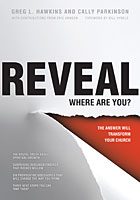 About ten years ago when the things going on at Willow Creek Community Church were a hot topic for conversation, and the "seeker sensitive" movement was gaining momentum, I had a conversation with one of the guys in my church where he said, "Chris, these guys are doing some really amazing things and some things that they're going to regret. Unfortunately, we won't know which is which for ten or fifteen years."
Those were wise words.
And here we are, ten years later, and the verdict is in. Well, at least in part.
Greg Hawkins has been the Executive Pastor at Willow Creek for the past eleven years, and Cally Parkinson was the director of communications at Willow Creek prior to taking her new role in the brand management wing of the Willow Creek Association. And their new book "Reveal, where are you?" is a look behind the scenes at several conversations going on at Willow Creek as they have begun an intentional look at how things are really going at Willow Creek.
Although you may not agree with the "seeker sensitive" strategy, or many of the things Bill Hybels has championed over the past several years, it is virtually impossible to not respect the guy. On multiple occasions, I've heard Hybels stand up on platforms and admit, "we never saw that coming," or "we could have done that better" about various things Willow Creek has done (or not done). Though I've never met him personally, I deeply respect the humility it takes to allow a book to be written by one of your staff members that highlights the warts, blemishes, and misses of your leadership team.
If nothing else, this book is the most visually appealing book I've ever read. The graphics, charts, and color-coded chapters make this book read like a picture book, although the information contained within its pages are far from elementary.
At its core, this book seeks to help other churches gain the right tools for measuring actual growth of its members rather than simply measuring growth of attendance. It aims to help churches think in terms of measuring those things that are less tangible and more difficult to observe about a church's success, like life change. The book tracks the evaluation process of Willow Creek Church as they looked at how successful they were at being a part of helping Christians grow at several different points along the Christian growth continuum.
To make a long story short, it seems Willow was doing a great job with brand new believers, and growing believers, but a lousy job with mature believers. And to make things worse, the mature believers were the ones who were most apt to help reach the seekers the church sought to reach. Come to find out, it isn't new believers who do the best job evangelizing seekers - it's Christ-Centered mature believers who do the best job evangelizing seekers. What's worse, they found that the mature and maturing believer was extremely dissatisfied with the local church because they had never learned to do ministry - rather they were noticing that the church didn't have anything to offer them. Rather than commissioning the mature believers into the world, Willow was trying to keep them in the church, and was losing the battle.
Though Hawkins and Parkinson don't verbalize it this way, I think the issue boils down to this: For the last 10 or 15 years, Bill Hybels has said that the local church is the hope of the world. Now they're beginning to realize that it isn't. Jesus is the hope of the world, and Christians are supposed to reflect His light to the rest of the world. The church's responsibility is to figure out how best to train, equip, and mobilize believers to grow out of the local church so that (as maturing children) they are less and less dependent on the church meeting their needs, and more apt to be used in meeting the needs of others.
This is a short, relatively easy read, and is worth perusing for anyone who is curious about the state of the seeker-sensitive church in the twenty-first century. It contains some great insight, neat ideas, and will stretch you to think about where you are on the spiritual growth continuum. Like the seeker-sensitive movement ten years ago, you may not agree with everything these authors recommend, but you will definitely be challenged by their thinking to come up with something that helps your church (and you as an individual) become all it is intended to be.
Subscribe to:
Posts (Atom)


